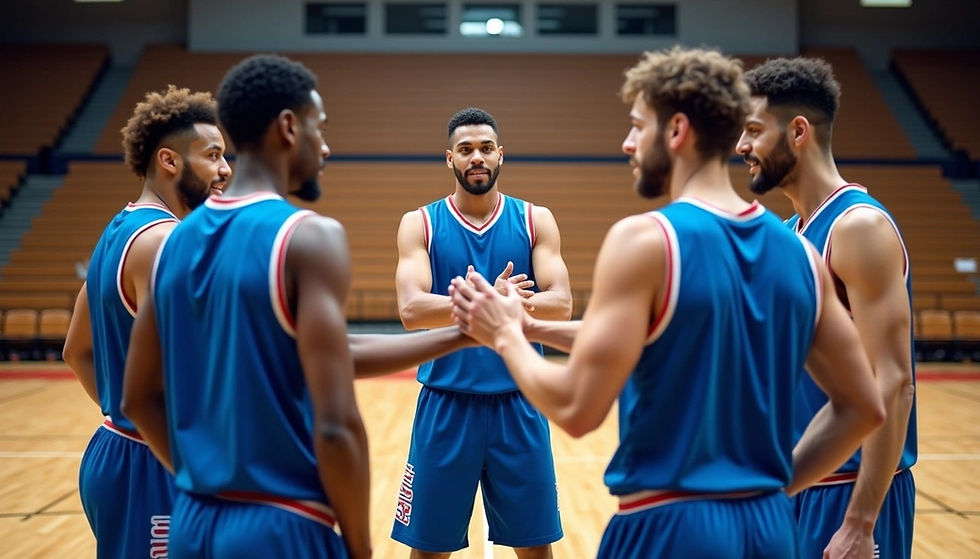
How to Beat Sports Anxiety: A Pro Athlete's Guide to Peak Performance
- Dr Paul McCarthy

- Dec 29, 2025
- 9 min read

The numbers are striking - 70% of athletes deal with sports anxiety during their careers.
Your legs shake before a game. Your mind races with worst-case scenarios. Sound familiar? You're nowhere near alone. Sports performance anxiety impacts 30% to 60% of athletes, making it one of the biggest mental hurdles they face. These symptoms can become overwhelming. A young rugby player's story comes to mind - the anxiety forced them to step away from the sport for months.
Mental strength, not physical ability, often separates good athletes from great ones. Elite athletes stand out because they see anxiety symptoms as excitement. This change in viewpoint can revolutionize your performance.
This piece will show you how to beat sports anxiety using techniques that professional athletes and sports psychologists swear by. You'll learn to spot anxiety symptoms early and build mental resilience that helps you perform your best when stakes are high.
Recognizing Sports Anxiety Early
Spotting the early signs of sports anxiety can help you thrive under pressure instead of struggling with it. You can tackle these signals before they mess up your game by understanding them better.
Common physical symptoms before competition
Your body sends anxiety signals before your mind catches up. Athletes often feel their heart racing, sweat more than usual, and shake before big events [1]. Their muscles get tight, headaches pop up, and stomach problems become common [2].
These physical reactions can really mess with your preparation. Many athletes have trouble breathing normally or feel tightness in their chest. Some even deal with stomach issues like nausea or diarrhea [2]. Sleep patterns take a hit too, which really matters for peak athletic performance [2].
Mental signs like overthinking and fear of failure
The mental side of sports performance anxiety can hit just as hard. Here's what usually happens in your head:
Athletes dealing with anxiety often talk themselves down with thoughts like "I can't do it" or "I'm going to fail" [3]. This creates more stress and anxiety piles up. The mind fills up with "what if" thoughts, and you worry too much about things going wrong [4].
How anxiety affects performance in real time
Sport performance anxiety messes with your game during competition. Too much anxiety throws off your coordination, clouds your judgment, and takes the fun out of your sport [5]. A little anxiety can help you focus and stay motivated, but too much of it tanks your performance [5].
You might notice yourself holding back or playing it too safe. Basic moves don't feel natural anymore, and you second-guess skills that should come automatically [2]. This creates a gap between what you can do and what you actually do on the field.
Your focus drifts from doing the right things to worrying about winning or losing [6]. This adds more pressure and your performance suffers. You can handle anxiety better if you spot these patterns early and use the right strategies.
Reframing the Way You See Anxiety
Athletes who excel don't just have better physical abilities - they think differently about their pre-competition feelings. Many athletes see nervousness as something they need to beat, but this way of thinking might actually hold them back.
Why anxiety is not always bad
Most people think sports anxiety hurts performance. The truth is that you need some anxiety to compete well [7]. When your heart races and you feel extra alert, your body gets ready for the physical challenge ahead [8].
The real difference between top athletes and others isn't whether they feel anxious - it's how they deal with it [7]. The best athletes see these feelings as excitement and helpful energy that gets them "pumped." Less confident athletes see these same feelings as threats [7].
Turning nerves into focus and energy
A game-changing moment in dealing with sports performance anxiety came when I found out that our bodies react almost the same way to anxiety and excitement [9]. The only real difference is what we tell ourselves about these feelings.
You don't need to fight against pre-competition nerves - that takes too much energy [9]. Try these methods instead:
Research backs this up - athletes who accept competitive anxiety instead of trying to get rid of it do better under pressure [11].
Examples from elite athletes
Many champions have learned this mental trick. Sha'Carri Richardson felt nervous before winning the Women's 100m at the Prefontaine Classic. She took her coach's advice and used "that nervousness as motivation" [12].
Liverpool's Virgil van Dijk, who won PFA Player of the Year, changed how he thinks: "Over the years, I've developed the mindset that there are many more important things in life... It's more excitement than nerves these days" [13].
Simone Biles, the gymnast who stepped back from several events during the Tokyo Olympics because of mental health, has talked about managing the tough cycle of pressure and anxiety [14].
8 Tools to Beat Sports Anxiety
Let's look at practical tools you can use right now to overcome performance nerves, now that we understand sports anxiety and how to reframe it. These proven techniques have helped countless athletes turn their pre-game jitters into competitive edges.
1. Controlled breathing techniques
Your parasympathetic nervous system activates right away with controlled breathing, which breaks the anxiety cycle. Box breathing works well - breathe in for four counts, hold for four, breathe out for four, then hold again for four. This steady pattern calms your system and moves your mind away from worried thoughts.
The "five breath technique" works well for athletes who feel too anxious before competing. Take slow breaths through your nose and let them out through your mouth. With each breath, relax different parts of your body.
2. Visualization and mental rehearsal
Top athletes use visualization to program success into their bodies. Your brain creates the same neural pathways whether you mentally practice or physically perform. Studies show that visualization makes sports skills better, improves technical execution, and helps with mental preparation.
The best results come from using all your senses in first-person view. Picture what you'd see, hear, feel, smell and taste during your perfect performance. Daily practice of this mental imagery strengthens these brain connections.
3. Positive self-talk and cue words
Your inner voice plays a huge role in how well you perform. Research shows athletes who use self-talk enjoy their sport more, try harder, and feel more capable. Positive self-talk made physical performance 11% better in one study.
Simple, powerful phrases like "I've got this" or "Stay strong" should replace negative thoughts. These mental anchors help you stay focused under pressure. Technical tasks need instructional self-talk ("Elbow up"), while strength and endurance activities work better with motivational phrases ("Give it your all").
4. Pre-performance routines
Pre-performance routines (PPR) are the specific thoughts and actions you use before executing your sport skill. Research proves these routines make you perform better in both low-pressure and high-pressure moments.
Your routine builds mental readiness, sharpens focus on what matters, and blocks out distractions. Whether you bounce the ball before serving or picture success before racing, consistency matters most. Make your routine personal and practice until it becomes second nature.
5. Setting process-based goals
Process goals target specific actions you can control instead of outcomes. Athletes benefit most from process goals because they provide clear direction in the moment.
Focus on doing fundamentals right (process) rather than obsessing about winning (outcome). This mindset eliminates distractions, sharpens concentration, and reduces perfectionism. A basketball player might focus on proper follow-through instead of making every shot.
6. Preparing for worst-case scenarios
Fear of being unprepared often causes performance anxiety. Practice dealing with "worst-case scenarios" to reduce uncertainty and build confidence. Work through challenging situations that might happen during competition.
This preparation helps you feel ready for anything. Try practicing while behind in score, with broken equipment, or in bad weather conditions.
7. Grounding techniques during play
The "5-4-3-2-1" method brings you back to the present moment when you feel overwhelmed during competition. Notice 5 things you see, 4 things you can touch, 3 sounds you hear, 2 smells, and 1 taste. This quickly cuts through mental noise.
You can also focus on physical sensations - feel your feet touching the ground or how your equipment weighs in your hands. These techniques bring your attention back to your body from racing thoughts.
8. Trusting your training and instincts
Athletes sometimes get stuck thinking too much about techniques they've already mastered during competition. Peak performance comes from switching to a "trusting mindset" where you rely on your preparation.
Michael Phelps showed this perfectly. He won Olympic gold even when his goggles filled with water during a final race. This trust comes from knowing your body remembers what to do - you've done the work, now let your training shine through.
Building Long-Term Mental Strength
A strong mental foundation helps you consistently overcome sports anxiety, rather than just finding quick fixes. You need to develop specific mental skills that change how you handle pressure over time.
Understanding psychological flexibility
The life-blood of mental toughness is knowing how to pursue your goals even when unwanted thoughts or emotions arise. Athletes who show more psychological flexibility have fewer symptoms of anxiety and depression [15]. They adapt better to challenges without feeling overwhelmed, unlike those stuck in rigid thinking patterns.
Accepting thoughts without reacting
Most traditional approaches suggest you should "control" negative thoughts, but this strategy often backfires. Research shows that trying to suppress unwanted thoughts makes them occur more frequently [16]. You can learn to observe anxious thoughts without judgment through acceptance-based methods. This creates mental distance from those thoughts. The goal isn't to give in to negativity but to acknowledge thoughts without fighting them.
Letting go of perfectionism
The fear of failure drives sports anxiety through perfectionism. Athletes who are perfectionists "fear failure and mistakes to such an extent that their sports enjoyment and performance are reduced" [17]. You should view mistakes as learning opportunities rather than threats. Success comes from a consistent approach, not perfect outcomes.
Staying consistent with mental training
Your mental strength grows slowly through regular practice. The largest longitudinal study shows that longer programs (6+ months) lead to much better improvements in mental toughness [18]. You should dedicate yourself to mental training just as you would to physical training.
Conclusion
The ability to handle sports anxiety ended up being what sets good athletes apart from great ones. This piece explores how anxiety affects between 30% to 60% of athletes. It's a common challenge, not a personal weakness.
Early recognition of anxiety symptoms gives you control to tackle them before they impact your performance. It also helps to think of those nervous feelings as excitement instead of threats. This creates a natural change in how your body handles pressure.
You can use eight practical tools right away before your next competition. These include controlled breathing, visualization, and pre-performance routines. Building mental resilience needs the same consistent practice and patience as physical training.
Note that elite athletes don't eliminate anxiety - they channel it into competitive energy. Your mental game deserves the same attention as your physical conditioning. Sports anxiety isn't something you need to beat. It's a powerful force you can channel toward peak performance.
You create psychological flexibility to thrive under pressure by accepting anxious thoughts without judgment and dropping perfectionism. Then you'll find yourself embracing high-pressure moments as chances to show your best performance.
These strategies will help you build a better relationship with pre-competition nerves. The trip to mental toughness takes time. Each step you take builds the foundation for consistent peak performance when it counts.
Key Takeaways
Sports anxiety affects 30-60% of athletes, but the key difference between good and great performers lies in how they interpret and manage these feelings rather than eliminating them entirely.
• Reframe anxiety as excitement - Elite athletes interpret physical symptoms like racing heart and sweating as helpful energy rather than threats to performance.
• Use controlled breathing and visualization - Box breathing (4-4-4-4 pattern) and mental rehearsal activate the same neural pathways as physical execution, programming success into your body.
• Develop pre-performance routines - Consistent, meaningful rituals create psychological readiness and minimize distractions when pressure mounts.
• Focus on process over outcome - Set goals around executing fundamentals correctly rather than winning, which reduces perfectionism and increases present-moment focus.
• Build psychological flexibility - Accept anxious thoughts without judgment and trust your training instead of overthinking techniques you've already mastered.
The most successful athletes don't eliminate nerves—they transform them into competitive advantages through consistent mental training and strategic reframing of pressure situations.
References
[1] - https://www.healthline.com/health/sports-performance-anxiety[2] - https://share.upmc.com/2022/05/how-anxiety-affects-sports-performance/[3] - https://www.parkview.com/blog/do-you-know-how-to-recognize-performance-anxiety[4] - https://therasportscounseling.com/how-anxiety-shows-up-in-athletes/[5] - https://accelerate.sport/blog-post/how-does-anxiety-impact-sports-performance/[6] - https://www.ryanpelling.com/blog/coping-with-pre-competition-pressure[7] - https://nflpa.com/posts/10-ways-to-combat-performance-anxiety-in-competition[8] - https://worldathletics.org/personal-best/performance/pre-competition-nerves-anxiety-advice-tips[9] - https://www.outsideonline.com/health/training-performance/new-science-embracing-performance-anxiety/[10] - https://www.drpaulmccarthy.com/post/how-to-deal-with-nerves-a-champion-s-guide-to-pre-competition-calm[11] - https://ahead-app.com/blog/anxiety/transform-anxiety-in-competitive-environments-into-performance-fuel-for-athletes[12] - https://www.peaksports.com/sports-psychology-blog/how-athletes-can-embrace-feeling-nervous/[13] - https://www.peaksports.com/sports-psychology-blog/pregame-nerves-facts-and-fiction/[14] - https://www.conditionmanagement.co.uk/news/tackling-sport-performance-anxiety-the-role-of-cognitive-behavioral-therapy[15] - https://pmc.ncbi.nlm.nih.gov/articles/PMC7739682/[16] - https://members.believeperform.com/let-it-be-let-it-be-acceptance-in-sport/[17] - https://www.drpaulmccarthy.com/post/how-to-stop-overthinking-in-sports-an-athlete-s-mental-preparation-guide[18] - https://pmc.ncbi.nlm.nih.gov/articles/PMC7299040/