


Why Athletes Feel Shame: A Coach's Guide to Overcoming Athletic Shame
- Dr Paul McCarthy

- Dec 22, 2025
- 9 min read
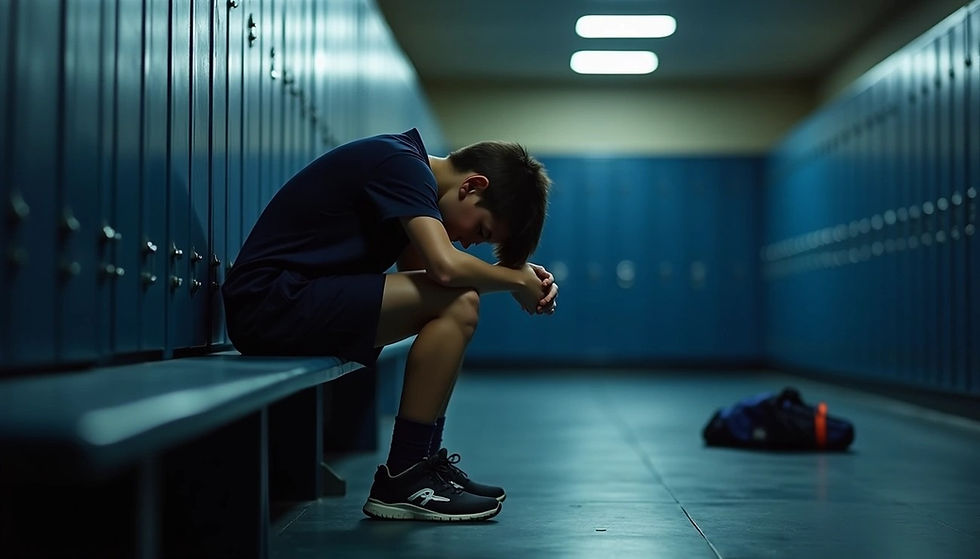
Athletic shame plagues nearly 50% of athletes who struggle with this destructive emotion during their performances . These athletes suffer silently despite their physical abilities. Shame chips away at their confidence and leaves them feeling isolated in their darkest moments . Research proves that athletes who lack self-esteem perform 20% worse than their confident teammates .
The damage from unresolved shame in sports reaches way beyond the reach and influence of performance numbers. Athletes feel crushed by performance expectations, with 37% experiencing burnout . Many develop an unhealthy fixation on outcomes and scoreboard results . Our experience with athletes who overcome adversity in sports reveals that tackling shame's mechanisms becomes vital to lasting success. Supporting these athletes requires understanding how shame-proneness connects to perfectionism, depression, anxiety, and substance use as coping tools .
This piece explores what sparks shame in athletes and its psychological effects. You'll discover five practical tools that break the shame cycle. The strategies we share will build lasting resilience and help athletes reshape their relationship with failure and expectations.
What Triggers Shame in Athletes
Shame hits athletes from many angles during their careers and strikes deep at who they are and how they value themselves. Athletes and coaches need to understand these triggers to tackle the mechanisms instead of just dealing with surface issues.
Performance failures and public mistakes
Athletes often feel shame after performance failures. They take these events personally and blame their character rather than the situation [1]. This goes beyond simple disappointment - athletes tell themselves "I failed, so I must be worthless" [1]. These feelings get worse when mistakes happen in front of crowds, teammates, and coaches.
Social media makes this even harder, with online attacks hitting sports figures harder than people in any discipline [2]. Take the Liverpool FC goalkeeper who faced harsh online abuse after his mistakes in the 2018 UEFA Champions League final [2]. Long performance slumps don't deal very well with this either - just ask Novak Djokovic, Lionel Messi, and Tiger Woods, who all got caught in shame cycles they couldn't shake [3].
Critical feedback and unmet expectations
Research shows athletes often fear feedback because it confirms their self-doubts or feels like a personal attack [4]. Many set perfectionist standards and worry about disappointing others when they get feedback [4]. The numbers back this up - 65% of athletes feel intense pressure from others to succeed [5].
Negative comments from teammates leave real damage. Athletes who face such criticism show much higher anxiety and lower self-esteem than those who don't [6]. Unrealistic expectations can break even the most gifted athletes. Mark Appel's story proves this - the 2013 MLB first draft pick saw his career crumble under too much pressure [7].
Comparison with peers and social pressure
Athletes size themselves up against teammates and rivals, often using looks as a way to judge athletic ability [8]. They check out their opponents' body types before competitions to guess their chances [8].
Social media makes everything worse. Athletes follow mostly sport-related accounts and see perfect athletic bodies all day [8]. They might try to copy others' looks hoping it will make them perform better [8].
Young athletes have it especially tough. Starting a sport late or feeling embarrassed while performing in front of others can create shame that sticks around [9]. This pressure goes beyond looks - many athletes hide their pain and keep training through injuries because they don't want to look "soft" [10].
The Psychological Impact of Shame in Sports
Athletes suffer more than just momentary discomfort from shame. It creates deep psychological wounds that can destroy their performance and wellbeing.
Loss of confidence and self-worth
Shame hits athletes at their core identity. They start seeing themselves as broken with little hope to improve [11]. This devastating mindset creates a real performance gap - research shows athletes with low self-esteem perform 20% worse than their confident peers [12]. Athletes begin to see themselves as "athletic frauds" as shame grows stronger. They question their worth and place in sport [13]. They feel a disconnect between their self-image and who they think they should be. This undermines even the simple skills they once performed without thinking.
Increased anxiety and performance pressure
Research shows 77% of athletes struggle with performance anxiety, with about 18 episodes each year [1]. More than half of active athletes (55.4%) "choked under pressure" in the last month alone [1]. This constant anxiety shows up physically through headaches, stiff shoulders, sleep problems, and digestive issues [14]. The situation looks even worse - 40% of athletes believe anxiety stopped them from reaching higher competitive levels [1]. This shows how pressure can limit their potential.
Social withdrawal and isolation
Shame creates a cruel paradox. Athletes need support more than ever, yet they pull away from those who could help them most. They distance themselves from teammates, coaches, and support networks right when they need connection [13]. This creates a dangerous cycle - more than half of college student-athletes felt "very lonely" last year [15]. Yes, it is shame that drives these avoidance behaviors. Many athletes stop doing activities that used to make them happy [11].
Long-term mental health risks
Athletic shame can turn into lasting mental health problems without help. Studies show 5-35% of elite athletes report mental health disorders [16]. The risks run deeper - shame-proneness has strong links to maladaptive perfectionism, depression, anxiety, and substance use as coping tools [11]. The most severe cases reveal that 7.1% of athletes have suicidal thoughts after major performance failures [1]. These risks affect some groups more than others - female athletes and individual sport competitors show higher athletic shame-proneness scores [13].
Breaking the Shame Cycle: 5 Tools That Work
Athletes need practical tools, not just theoretical knowledge to break free from athletic shame. Let's explore five proven strategies that work after looking at what causes shame and how it affects athletes negatively.
1. Recognize and name the emotion
Athletes heal better when they acknowledge shame instead of hiding it. Shame loses its power when caught early, just like catching a ball before it hits the ground [17]. Your feelings and specific triggers deserve a place in your journal. This helps you understand that other athletes face similar emotions, which reduces isolation [13].
2. Reframe negative self-talk
Negative self-talk affects athletic performance by changing motivation and behavior [3]. The solution starts with writing down your negative thoughts exactly as they appear. Then create healthier alternatives. You can turn "I'm terrible under pressure" into "Pressure is my chance to show what I've got" [18]. This new perspective doesn't eliminate challenges but turns them into opportunities for growth.
3. Practice self-compassion
Research connects self-compassion with better athletic performance, showing a positive correlation to perceived sport performance (r = 0.29) [11]. You build resilience against shame by treating yourself with the same kindness you'd show a teammate. Brief self-compassion exercises have showed medium effect sizes (np2 = .07) in reducing shame [13].
4. Set realistic performance goals
SMART goals (Specific, Measurable, Achievable, Relevant, Time-bound) help track your progress without setting you up for disappointment [19]. Your energy should focus on fixing specific problems rather than making vague promises to "be better." Remember, your goals should come from self-love, not from proving your worth [13].
5. Use mindfulness to stay grounded
Mindfulness techniques keep you present instead of dwelling on past mistakes. Elite athletes have used this practice for decades to control emotional responses during competition [20]. LeBron James's yearly investment of £0.79 million in restorative techniques shows how much top athletes value mental conditioning [21].
Building Long-Term Resilience in Athletes
Athletes need long-term resilience to face future challenges without falling back into shame-based responses. Their successful recovery depends on several key elements that work together.
Creating a strong support system
Athletic resilience starts with all-encompassing support networks. Research shows that trust in relationships forms the foundations of effective psychosocial support for athletes [22]. The system has trained doctors, performance psychologists, and lifestyle advisors who cooperate to spot early signs of mental health challenges [23]. A study revealed that sport-specific mental health literacy training substantially improves the support given to struggling athletes [22].
Embracing vulnerability as strength
Vulnerability becomes a powerful asset that helps overcome athletic shame. Athletes who share their vulnerabilities with teammates create an understanding environment and strengthen team bonds. This leads to a 30% boost in team performance [2]. Their authenticity drives growth as teammates tackle challenges together. Leadership roles benefit more from vulnerability than trying to project a flawless image [2].
Focusing on growth over perfection
Athletes with a growth mindset see setbacks as opportunities to learn. This mindset helps them learn from challenges, mistakes, and feedback [24]. In spite of that, developing this mindset takes practice. Athletes need to see workouts as chances to improve rather than tests of their ability [25]. Coaches should praise effort and consistency over performance to show that improvement comes through steady work [25].
Encouraging athlete self-forgiveness
Self-forgiveness is a vital part of building resilience. The process starts with taking responsibility, accepting remorse, making amends when possible, and building self-compassion [26]. Athletes benefit from a three-step approach: learn about the mistake, forgive yourself by removing ego, then refocus and move forward [27]. Self-forgiveness helps separate identity from events, letting athletes work with facts instead of emotional weight [27].
Conclusion
Athletic shame is a powerful force that affects nearly half of all athletes, yet people rarely talk about it. This piece reveals how destructive shame is different from healthy disappointment. It doesn't just affect performance - it strikes at an athlete's core identity.
Athletes face shame from many sources. Public failures, critical feedback, unrealistic expectations, and social comparisons can trigger it. These create devastating psychological effects on confidence and increase anxiety. Athletes often isolate themselves, which can lead to serious mental health challenges.
The good news is that anyone can take practical steps to break free from shame. The power of shame diminishes when we spot it early. Athletes can create new mental pathways that support growth by changing their negative self-talk. Self-compassion, realistic goal-setting, and mindfulness have proven helpful tools for athletes of all levels.
Athletes need long-term resilience strategies beyond immediate help. Strong support systems can spot early warning signs before shame takes control. What seems like weakness becomes real strength through vulnerability. A growth mindset helps athletes focus on progress instead of perfection. Self-forgiveness lets them separate who they are from their mistakes.
Coaches play a vital role in this process. We should spot shame symptoms in our athletes and create safe spaces for honest communication. Our athletes learn from us. They develop self-compassion after mistakes when we show the same toward ourselves.
Athletic shame runs on silence and isolation. Open conversations about shame become our most powerful tool to help athletes overcome this destructive emotion. Addressing shame takes courage, but letting athletes suffer in silence costs too much in performance and wellbeing.
Every athlete should be free from shame's crushing weight. We can help them rediscover their joy in sport and reach their full potential through understanding, compassion, and
regular practice of these tools.
Key Takeaways on Why Athletes Feel Shame
Athletic shame affects nearly 50% of athletes and can devastate both performance and mental health, but coaches can help break this destructive cycle through targeted interventions and long-term resilience building.
• Recognize shame triggers early: Performance failures, critical feedback, and peer comparisons create shame that differs from healthy disappointment by attacking identity rather than just performance.
• Use the 5-tool approach: Name the emotion, reframe negative self-talk, practice self-compassion, set realistic goals, and apply mindfulness to break shame cycles effectively.
• Build resilient support systems: Create networks of trained professionals and teammates who can detect early warning signs and provide sport-specific mental health support.
• Transform vulnerability into strength: Athletes who share struggles with teammates see 30% better team performance and develop authentic leadership skills.
• Focus on growth over perfection: Adopt a growth mindset that views setbacks as learning opportunities rather than identity threats, praising effort over outcomes.
The key to overcoming athletic shame lies in bringing these conversations into the open—shame thrives in silence but loses power when addressed with understanding, practical tools, and consistent support from coaches and teammates.
References
[1] - https://www.sciencedirect.com/science/article/pii/S1469029224000748[2] - https://www.drpaulmccarthy.com/post/the-power-of-vulnerability-unveiling-the-resilience-of-athletes[3] - https://blog.nasm.org/sports-performance/how-to-rewire-athlete-self-talk-to-improve-sports-performance[4] - https://www.peaksports.com/sports-psychology-blog/how-athletes-can-use-constructive-criticism/[5] - https://www.drpaulmccarthy.com/post/understanding-the-roots-of-disappointment-in-sports-and-how-to-overcome-it[6] - https://www.sciencedirect.com/science/article/pii/S1740144522001565[7] - https://www.peaksports.com/sports-psychology-blog/how-high-expectations-sabotage-athletes-mental-game/[8] - https://pmc.ncbi.nlm.nih.gov/articles/PMC8103200/[9] - https://kids.frontiersin.org/articles/10.3389/frym.2022.685811[10] - https://www.tandfonline.com/doi/full/10.1080/02640414.2023.2273084[11] - https://pmc.ncbi.nlm.nih.gov/articles/PMC8116891/[12] - https://www.drpaulmccarthy.com/post/understanding-shame-in-sports-its-influence-on-athletes-and-strategies-for-resilience[13] - https://www.drpaulmccarthy.com/post/the-shame-cycle-in-sports-what-every-athlete-needs-to-know[14] - https://www.frontiersin.org/journals/psychology/articles/10.3389/fpsyg.2021.601812/full[15] - https://www.tandfonline.com/doi/full/10.1080/1750984X.2024.2405507[16] - https://health.clevelandclinic.org/mental-health-in-athletes[17] - https://dreddieoconnor.com/blog/how-to-deal-with-shame/[18] - https://thementalgame.me/blog/the-art-of-reframing-how-to-use-self-talk-to-turn-mistakes-into-learning-opportunities[19] - https://appliedsportpsych.org/resources/resources-for-athletes/principles-of-effective-goal-setting/[20] - https://www.ncsasports.org/blog/benefits-of-mindfulness-for-athletes[21] - https://news.berkeley.edu/2021/09/20/breaking-the-cycle-of-shame-about-mental-struggles-in-athletics/[22] - https://www.sciencedirect.com/science/article/pii/S2212657024000461[23] - https://uksportsinstitute.co.uk/resource/mental-health-support-in-high-performance-sport/[24] - https://appliedsportpsych.org/blog/2021/04/revisiting-growth-mindset-as-a-core-capacity-of-sport-psychology/[25] - https://www.trainingpeaks.com/coach-blog/how-to-cultivate-a-growth-mindset-in-athletes/[26] - https://positivepsychology.com/self-forgiveness/[27] - https://thementalbarbell.com/get-the-information-forgive-yourself-and-play-on/

