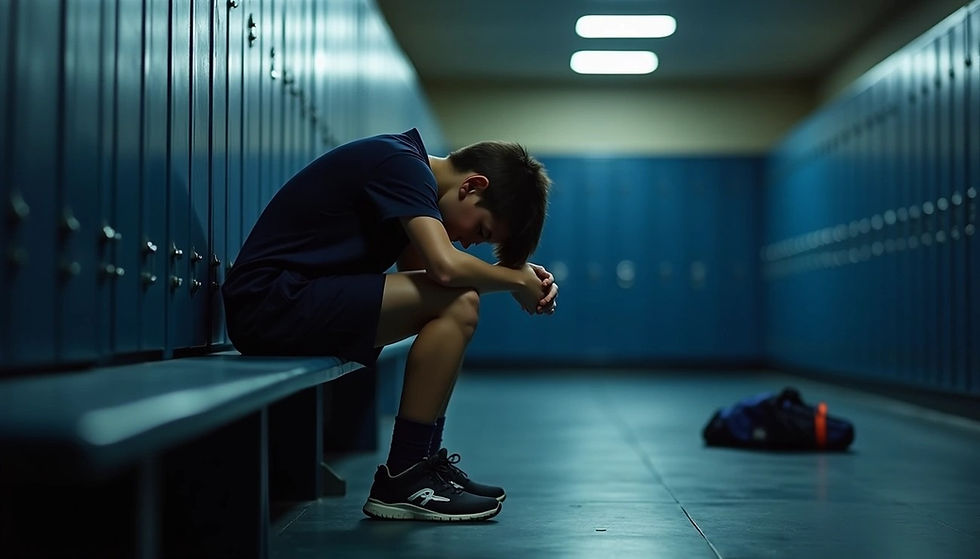
The Hidden Mental Battle: What Every Injured Athlete Needs to Know


Did you know that 43% of injured athletes will face at least one injury each season? These injuries lead to about 17 days away from training and make them miss one competition. These numbers paint only part of the picture. The real battle happens in the athlete's mind, far from what anyone can see.
At the time an injury strikes, athletes go through waves of emotions - surprise, frustration, anger, sadness, and a deep sense of loss. Their mental state plays a vital role in getting better, not just a side effect. Research shows that depression makes healing harder for injured athletes. It amplifies their emotional responses and slows down physical recovery. Athletes' mental state becomes even more challenging with major injuries or ones that need surgery. This creates a loop where mental health and physical healing feed into each other.
Fear itself can predict future injuries - that's the scary part. A study of ACL reconstruction patients revealed something striking. Athletes who felt more afraid were 13 times more likely to tear their ACL again within two years of returning to sports, compared to those who felt less fearful. This shows why taking care of an injured athlete's mental health matters just as much as their physical therapy.
In this piece, we'll look at the emotional side of sports injuries. You'll learn what mental factors shape recovery and what methods help you direct both your physical and mental healing.
Understanding the Emotional Toll of Injury
Sports injuries strike suddenly and trigger a cascade of psychological responses that often outlast physical pain. Research shows that 40% of injured athletes experience clinically diagnosable depression [1]. These findings reveal how deeply physical trauma affects athletes emotionally.
First moments of shock and denial
Athletes typically experience an overwhelming sense of disbelief when an injury occurs. The brain creates strong neural connections between the sensory information of the injury and the emotional response during this phase [2]. Many athletes describe feeling "hysterical" or dropping "to the floor in shock" as they process the sudden disruption to their athletic identity [3]. Athletes frequently downplay their injury's severity or hope it will resolve quickly without intervention [4].
Common emotional responses: anger, sadness, fear
Powerful emotional reactions emerge after the shock subsides. Studies indicate that 51% of male college athletes show symptoms of emotional distress after injury [5]. Athletes often feel rage toward circumstances, teammates, or themselves. Their frustration grows due to physical limitations and missed training opportunities. Research identifies reinjury anxiety as a dominant concern that can physically show up as "muscular guarding" [4]. This fear can reduce sports participation and delay competitive return even after complete physical healing.
Depression in injured athletes: early signs to watch
Depression emerges as one of the most serious psychological responses and affects athletic recovery in multiple ways. Research reveals that 33% of injured Division I football players report high levels of depression symptoms [6]. Athletes might display early warning signs such as persistent sadness, changes in appetite, sleep problems, irritability, and withdrawal from team activities. They may also exhibit problematic reactions like excessive anger, frequent emotional outbursts, or substance abuse [6]. One study documented that injured athletes often experience "a week of depression" with constant crying [3]. This finding shows the intense emotional suffering that accompanies physical injury.
Key Psychological Factors That Influence Recovery
The mental toll of an injury goes way beyond physical pain. It often decides if an athlete will ever return to their sport. Several mental factors are vital parts of the recovery trip.
Fear of reinjury and performance anxiety
Fear of reinjury is the top reason athletes don't return to sports after rehabilitation [4]. This fear creates a tough cycle. Physical tension changes how athletes move, which makes actual reinjury more likely. After ACL reconstruction, more than half of patients who didn't reach their pre-injury sport level said they didn't trust their knee or were afraid of getting hurt again [7]. Those who aren't mentally ready to return also score higher on fear avoidance surveys. They believe the injury has put their future athletic career at risk [8].
Loss of identity and self-worth
Athletic performance is the foundation of many competitors' self-image. Being sidelined disrupts their identity because their self-worth connects deeply with their sporting abilities [9]. Athletes often ask themselves "Am I still an athlete if I'm not performing?" [10] when they lose their usual training routines, team connections, and competitive goals. This identity crisis leaves many confused about their value outside sports, and their self-esteem drops [11].
Unrealistic expectations and pressure to return
Athletes often set unrealistic recovery timelines [12]. Coaches, teammates, or high-profile role models influence these expectations. Missing these self-set deadlines hurts their confidence during rehabilitation. The pressure to support teammates creates inner conflicts between quick return and fear of getting hurt again [13].
The role of resilience and self-efficacy
Research shows that athletes with higher resilience recover faster and have fewer symptoms [14]. Resilient athletes believe more in their treatment's success and show more faith in their rehabilitation program. Self-efficacy—believing in your ability to follow the recovery plan—improves outcomes significantly [15]. Mental techniques like guided imagery during rehabilitation help boost this vital self-belief [16].
Effective Psychological Interventions for Injured Athletes
A sports injury needs more than physical healing. Athletes need psychological strategies to heal both mentally and physically. Research shows these approaches can substantially improve recovery outcomes and help athletes return to their sport feeling confident.
Goal setting and progress tracking
Clear, achievable goals give injured athletes a roadmap to recovery. Athletes who take charge of their healing through goal-setting often recover faster [17]. The best results come from setting both short-term goals for each rehabilitation phase and long-term goals about returning to competition. The SMART framework—ensuring goals are Specific, Measurable, Attainable, Relevant, and Time-bound—adds structure to this process [17].
Athletes who set their own goals become more invested in rehabilitation. Progress tracking provides solid evidence of improvement and gives psychological boosts during tough times. Daily monitoring of physical and mental experiences helps athletes overcome injury [18]. This documentation lets athletes see their progress even when daily changes seem invisible.
Visualization and mental rehearsal
Mental imagery is a powerful tool that links mind and body by connecting emotions with physiological responses [19]. Athletes can control stress, reduce pain, and feel less anxious about returning to play through visualization [19]. Mental rehearsal activates the same neural networks used in physical movement, which helps maintain motor skills during recovery [17].
About 68% of injured athletes use some form of imagery during rehabilitation, but the quality varies substantially [20]. Sport-specific guided imagery helps athletes cope better psychologically and worry less about getting hurt again [21]. Good visualization creates vivid, multi-sensory images of healing tissue, successful rehabilitation exercises, and confident performance after recovery [22].
Positive self-talk and cognitive restructuring
Cognitive restructuring teaches athletes to spot negative thoughts and replace them with positive, adaptive self-statements [23]. This technique, part of cognitive behavioral therapy (CBT), shows substantial positive effects on performance [23]. Athletes who use positive self-talk enjoy their recovery more, value their effort higher, and feel more competent [24].
Studies of fast and slow healers revealed big differences in their internal dialog. Fast healers said things like "I can beat this thing" and "It's getting better all the time." Slow healers often thought "It will never be as strong again" or "I'll never make up for lost time" [25]. Athletes can create a healing mindset by practicing positive self-talk and reframing their injury experience.
Relaxation techniques and breathing exercises
Stress and muscle tension block healing by limiting blood flow and increasing pain. Relaxation strategies with breathing exercises are crucial for recovery [19]. Diaphragmatic breathing loosens tight muscles and increases blood flow to injured areas, which promotes physical healing and calms the mind [6].
Box breathing—inhaling for four counts, holding for four, exhaling for four, and pausing for four—reduces stress and pain effectively [3]. Body scanning helps athletes become aware of physical sensations without judgment [26]. Simple 15-minute relaxation exercises can lower stress levels, and imagery techniques boost healing during rehabilitation [19].
Building a support network
Social support protects athletes from negative psychological responses to injury [27]. Studies show that over 80% of injured athletes depend on their athletic trainers during recovery [28]. Athletes who feel satisfied with their social support experience less depression and anxiety when returning to play [28].
Athletes need different types of support throughout recovery. Emotional support helps most right after injury and during return to play. Information becomes more valuable as rehabilitation progresses [28]. Keeping injured athletes involved in team activities through non-playing roles maintains their sense of belonging and identity [29].
When to seek professional help
Athletic trainers and physical therapists provide basic psychological support, but serious issues need professional mental health care [30]. Athletes should seek specialized help if they experience ongoing anxiety, depression, or intrusive thoughts about their injury [30].
Medical professionals help by checking on athletes' emotional state and normalizing psychological struggles during recovery [30]. Early psychological help prevents unhealthy coping patterns and speeds up recovery [31]. Note that mental health care during injury rehabilitation isn't optional—it's crucial for complete healing.
Preparing for a Mentally Healthy Return to Sport
Psychological readiness serves as the final bridge between rehabilitation and a successful return to sport. Studies reveal that while 63% of athletes achieve good physical recovery after injuries, many fail to return to their previous competitive level [4]. Mental barriers, not physical limitations, often create this gap.
Assessing psychological readiness
Athletes need confidence and freedom from fear to be psychologically ready [32]. Several proven tools help determine an athlete's mental preparedness. The Injury-Psychological Readiness to Return to Sport (I-PRRS) scale measures confidence levels. Scores under 50 suggest that athletes should delay their return [8]. The ACL-Return to Sport after Injury (ACL-RSI) scale evaluates emotions, performance confidence, and risk assessment [33]. These tools help spot athletes who show excessive fear-avoidance behaviors that could hurt their comeback.
Gradual reintegration into training
Athletes need a step-by-step approach to return mentally healthy. They succeed by:
Starting with controlled, pain-free activities before moving to sport-specific drills
Adding 10% more activity each week to adapt physically and mentally [34]
Taking part in warm-ups and drills before competitive elements
Building up playing time step by step (like starting with 10 minutes before substituting) [34]
This measured approach builds confidence through success while reducing reinjury risk.
Dealing with fear and performance pressure
Fear of reinjury affects 75% of recovering athletes and creates physical symptoms like changed movement patterns and slower reaction times [35]. Athletes must focus on facts about their current state rather than emotional responses to overcome this fear [2]. The brain's neuroplasticity lets athletes rewire their fear response through methods like cognitive restructuring—they learn to replace limiting beliefs with strengthening alternatives [35].
Maintaining mental health post-recovery
Athletes need ongoing attention to their psychological well-being. Quality sleep ranks as the second most important factor in regaining full strength and keeping mental stability [36]. Athletes who develop interests beyond sport adapt better to changes [37]. A strong support network of medical professionals, coaches, and teammates helps throughout the return-to-sport journey and beyond [38].
Conclusion
Athletic injuries go way beyond physical damage. Our research shows psychological responses substantially affect recovery outcomes and future performance. Athletes typically move from the original shock and denial through anger, fear, and sometimes depression. These emotions are normal parts of healing and need proper attention.
The fear of getting hurt again emerges as the biggest psychological barrier athletes face. This fear creates actual physical changes that can hurt performance and make injuries more likely. Athletes often question their self-worth and purpose when they lose their athletic identity.
Recovery works best with a two-pronged approach. Physical rehabilitation must work together with psychological techniques like goal setting, visualization, positive self-talk, and relaxation methods. Athletes who use these mental strategies usually recover faster and achieve better results.
Support from others plays a vital role in the whole ordeal. Coaches, teammates, and medical professionals who understand both physical and emotional aspects can make a huge difference in an athlete's recovery.
Athletes need psychological readiness assessment and gradual reintegration to return to competition. A slow, steady approach builds confidence while reducing risks. Small wins add up over time and help replace fear with new trust in your body.
Professional psychological help shows your steadfast dedication to full recovery, not weakness. Mental health care is just as important as physical therapy in injury rehabilitation.
Injuries may disrupt athletic careers, but they also help develop resilience, self-awareness, and mental skills that improve performance long after physical healing. Many athletes come back stronger than before with psychological tools that boost both sport performance and overall well-being.
The challenge might feel daunting sometimes. Understanding the psychological side of injury recovery helps you control your healing process. Working on both mind and body creates a strong foundation to return to sport and maybe even turns a devastating setback into a catalyst for growth.
Key Takeaways on What Every Injured Athlete Needs to Know
Sports injuries create a hidden psychological battle that's just as important as physical healing, affecting 40% of injured athletes with clinically diagnosable depression and significantly impacting recovery outcomes.
• Fear of reinjury is the #1 barrier to return - Athletes with higher fear levels are 13x more likely to suffer repeat injuries within two years • Mental health directly impacts physical healing - Depression and anxiety create a vicious cycle that slows tissue repair and prolongs recovery time • Psychological interventions accelerate recovery - Goal setting, visualization, positive self-talk, and relaxation techniques significantly improve healing outcomes • Identity crisis compounds injury trauma - Athletes often struggle with self-worth when sidelined, requiring support to maintain confidence beyond sport performance • Gradual mental reintegration is crucial - Psychological readiness assessment and progressive exposure help rebuild confidence while minimizing reinjury risk
The most successful recoveries address both mind and body simultaneously. Athletes who actively engage with psychological strategies alongside physical rehabilitation not only heal faster but often return stronger, equipped with mental tools that enhance long-term performance and resilience - what every injured athlete needs to know
References
[1] - https://www.stoneclinic.com/blog/sports-injury-depression[2] - https://www.hss.edu/health-library/move-better/fear-of-reinjury[3] - https://pliability.com/stories/breathing-exercises-for-athletes[4] - https://pmc.ncbi.nlm.nih.gov/articles/PMC5349388/[5] - https://www.2adays.com/blog/ouch-17-symptoms-of-post-injury-depression-in-athletes/[6] - https://nottinghamphysio.com/breathing-the-hidden-powerhouse-in-sports-rehabilitation/[7] - https://academic.oup.com/ptj/article-abstract/102/2/pzab272/6480895[8] - https://pmc.ncbi.nlm.nih.gov/articles/PMC10878413/[9] - https://www.mindup.com.au/sidelined-the-mental-health-impact-of-sports-injuries/[10] - https://thementalgame.me/blog/the-mental-comeback-reclaiming-confidence-and-identity-post-injury[11] - https://www.psychologytoday.com/gb/blog/the-whole-athlete/201903/psyche-of-the-injured-athlete[12] - https://bjsm.bmj.com/content/54/19/1149[13] - https://www.hmpgloballearningnetwork.com/site/podiatry/understanding-psychology-injured-athletes-and-returning-play[14] - https://pmc.ncbi.nlm.nih.gov/articles/PMC12508535/[15] - https://www.arthroscopyjournal.org/article/S0749-8063(23)00385-7/fulltext[16] - https://pubmed.ncbi.nlm.nih.gov/37308138/[17] - https://imagine.sa.ucsb.edu/issue/51/2024/psychological-injury-rehabilitation-link-between-body-and-mind[18] - https://www.trainingpeaks.com/blog/monitoring-your-progress-through-an-injury/[19] - https://pmc.ncbi.nlm.nih.gov/articles/PMC4080595/[20] - https://pmc.ncbi.nlm.nih.gov/articles/PMC2707070/[21] - https://www.sciencedirect.com/science/article/pii/S2095254612000415[22] - https://appliedsportpsych.org/resources/injury-rehabilitation/using-the-mind-to-heal-the-body-imagery-for-injury-rehabilitation/[23] - https://sk.sagepub.com/ency/edvol/encyclopedia-of-sport-and-exercise-psychology/chpt/cognitive-restructuring[24] - https://pmc.ncbi.nlm.nih.gov/articles/PMC7429435/[25] - https://www.coreconceptsphysio.sg/article/mind-and-body-iii-imagination-and-self-talk-for-sports-injury-rehabilitation/[26] - https://search.mskdoctors.com/doctors/ella-mcaleese/articles/how-mindfulness-can-aid-sports-injury-recovery[27] - https://pmc.ncbi.nlm.nih.gov/articles/PMC3554039/[28] - https://pmc.ncbi.nlm.nih.gov/articles/PMC4264649/[29] - https://www.return2play.org.uk/2025/03/12/recovering-from-injury-the-importance-of-athlete-wellbeing/[30] - https://answers.childrenshospital.org/psychology-sports-injury-recovery/[31] - https://strengthlabldn.com/anger-in-sports-injuries/[32] - https://bmjopensem.bmj.com/content/10/2/e001869[33] - https://research.stmarys.ac.uk/id/eprint/5475/1/International Review of Sport and Exercise Psychology FINAL.docx[34] - https://www.wsh.nhs.uk/CMS-Documents/Patient-leaflets/Physiotherapy/6579-1-Return-to-sport-post-injury-top-tips-for-young-people.pdf[35] - https://fickptandperformance.com/the-mental-game-of-injury-recovery-overcoming-fear-and-building-confidence/[36] - https://pmc.ncbi.nlm.nih.gov/articles/PMC12445178/[37] - https://www.truesportsphysicaltherapy.com/blogs/how-athletes-build-mental-resilience-for-peak-performance-and-recovery[38] - https://journals.lww.com/jbjsreviews/fulltext/2025/09000/athlete_s_mental_health_and_quality_of_life_after.7.aspx