


Burnout in Sport: Proven Strategies Every Athlete and Coach Needs to Know
- Dr Paul McCarthy

- May 5
- 12 min read
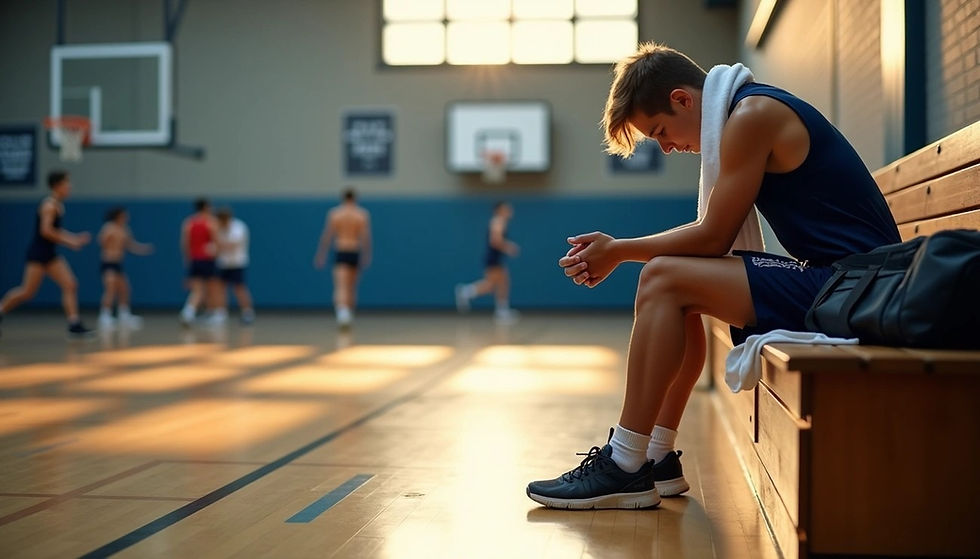
The athlete sits solitary upon a bench, shoulders slumped beneath the weight of expectation and exhaustion—a tableau that mirrors countless others across gymnasiums and training grounds worldwide. This image speaks to a troubling arithmetic: 70% of young athletes abandon organized sport before their thirteenth year [5], whilst research illuminates that youth sports burnout afflicts half of participants in some surveys [5]. Among elite athletes, 35% wrestle with profound mental health challenges [5]—figures that compel us to question what lies beneath the veneer of sporting achievement.
The malady we term burnout extends beyond mere physical depletion; indeed, athlete burnout emerges through a concatenation of chronic emotional exhaustion, cynicism, and diminished sense of accomplishment that corrode performance incrementally [5] [5]. Yet I find myself wondering: do we fully comprehend the internal furniture of the athletic mind when it begins to fracture under pressures both visible and sequestered?
These pages represent my attempt to peer beyond the concrete metrics of training loads and performance indicators—though such data proves instructive—toward the more elusive textures of athletic experience. The strategies herein address not merely the symptoms of sporting burnout but the underlying tensions between expectation and reality, between what athletes feel compelled to present and what they genuinely experience.
Understanding burnout in youth sport demands that we examine the loose threads often excluded from formal discourse: the overtraining patterns that masquerade as dedication, the coaching relationships where power eclipses care, and the recovery practices that either nurture resilience or accelerate decline.
Perhaps the most pressing question remains unspoken in many discussions of athletic burnout: what drives our persistent focus on performance optimization whilst the performers themselves quietly withdraw?
The Topography of Athletic Exhaustion: Charting Territories of Mind and Body
What Constitutes This Malady We Term Burnout
Herbert Freudenberger first sketched the contours of burnout in 1974, though his initial cartography concerned workplace stress rather than sporting endeavour. Raedeke later adapted this conceptual framework for athletics in 1997, defining athlete burnout as a multidimensional syndrome anchored by three cardinal dimensions [5]. The first territory—emotional and physical exhaustion—manifests as profound fatigue and emotional depletion arising from relentless training and competition demands [5]. The second realm encompasses reduced sense of accomplishment, wherein athletes render harsh verdicts upon their own skills and capabilities [5]. Sport devaluation occupies the third domain, where athletes lose interest and desire, caring little for performance outcomes [5].
I often ask athletes in consultation: "When did training stop feeling like choice and start feeling like obligation?" Their responses illuminate something beyond mere physical fatigue. Athletes traversing this syndrome frequently absent themselves from training sessions, experience disproportionate frustration with prescribed routines, struggle to establish meaningful objectives, or derive no satisfaction from competitive results [6]. The texture of their experience suggests we witness not simply overwork but a fundamental erosion of the relationship between self and sport.
The Visible and Hidden Manifestations
The body telegraphs distress through chronic muscle and joint pain, weight loss, elevated resting heart rate, diminished performance, protracted recovery periods, and frequent illnesses [7]. Cognitive disruption surfaces as concentration difficulties, forgetfulness, and declining academic performance [3]. Emotionally, athletes report irritability, mood fluctuations, helplessness, loss of enjoyment, and heightened anxiety [3] [7]. Behaviorally, withdrawal from teammates, decreased motivation to attend training, and resistance to prescribed routines become apparent [5].
Yet I suspect the most telling symptoms remain unspoken—the stray thoughts and feelings that athletes feel compelled to sequester from coaches, parents, and peers.
The Progressive Architecture of Decline
Petrie's research reveals three distinct stages of athletic burnout [5]. The initial stage presents early warning signals: elevated stress levels and reduced motivation, requiring interventions centered upon rest, recovery, and establishment of protective boundaries [5]. The second stage involves chronic stress with further deterioration in motivation and effectiveness, demanding adjustments to training loads and psychological mindset whilst reinforcing team values and self-care practices [5]. The final stage represents complete burnout—total physical and emotional exhaustion necessitating substantial life modifications, professional support, and commitment to long-term restoration [5].
Perhaps the most unsettling aspect lies in how athletes often present well during the early stages, their public performance masking internal deterioration until the carapace of competence finally fractures.
The Contemporary Epidemic Among Young Athletes
Research indicates that 30% of young athletes encounter burnout symptoms at some juncture in their sporting journey [4]. Burnout prevalence among collegiate athletes has demonstrated an ascending trajectory over the past two decades [5]. Youth sports have undergone a metamorphosis from informal street games into a professionalized industry rivaling professional leagues in annual revenues [8]. Early specialization in single sports promotes overtraining and inadequate rest, with young athletes expected to train like seasoned professionals to secure collegiate scholarships [5]. Year-round training schedules afford minimal respite for alternative activities that might promote holistic well-being [5].
The question haunting this landscape remains: what have we sacrificed in our pursuit of athletic excellence, and do we fully comprehend the cost?
The Architecture of Athletic Demise: Foundations That Crumble
What lies beneath the polished surface of sporting excellence when the structure begins to buckle? The foundations supporting athletic endeavour prove more fragile than we care to acknowledge, yet I find myself compelled to examine these subterranean fissures that eventually manifest as the phenomenon we term burnout.
The Paradox of Preparation Without Respite
Athletes pursue performance enhancement through elevated training loads, yet the gains they seek materialize only when interspersed with adequate rest periods [5]. Here lies a curious contradiction: the very mechanism intended to build strength becomes the instrument of destruction when recovery disappears from the equation [5]. Research illuminates that 60% of elite runners experience nonfunctional overreaching during their athletic careers, compared with 33% of their non-elite counterparts [5]. Prolonged intense training without proper restoration disrupts the delicate equilibrium between stress and adaptation, creating perturbations across neurologic, endocrinologic, and immunologic systems [5].
Perhaps we might ask: why do athletes and coaches persistently ignore the body's whispered pleas for rest until they become screams of exhaustion?
The Weight of Expectations and the Cage of Perfection
Performance pressure emerges from a constellation of sources: training demands, competition schedules, media scrutiny, and the uncertainty that accompanies injury-related career threats [7]. Athletes who exhibit maladaptive perfectionism construct elaborate psychological prisons, setting unrealistically high standards whilst maintaining constant vigilance against mistakes—a recipe for persistent psychological strain that accelerates burnout risk [5]. Research demonstrates that athletes dwelling within ego-involving environments, where outcomes and comparison reign supreme, report greater burnout than those fortunate enough to inhabit task-involving climates emphasizing personal growth [8].
The sense I draw from observing athletes is that many feel trapped within expectations that were never truly their own.
The Illusion of Choice and the Reality of Entrapment
Athletes who experience sport as something they 'must do' rather than 'choose to do' face heightened vulnerability to burnout [5]. This entrapment manifests through various pathways: lack of perceived alternatives, overwhelming personal investment, or identity so thoroughly intertwined with athletic performance that separation becomes unthinkable [5]. Autonomy proves fundamental for intrinsic motivation and well-being; when athletes lack genuine autonomy, their psychological needs for competence and relatedness become systematically undermined, accelerating emotional exhaustion [5].
I debate whether this represents a failure of the system or an inevitable consequence of professionalized sport.
The Coaching Relationship: Cornerstone or Catalyst for Destruction
Research reveals that all three dimensions of coach-athlete relationships—closeness, commitment, and complementarity—correlate negatively with burnout symptoms [9]. Yet a study of young elite athletes uncovered that 34% reported emotionally harmful treatment by coaches or trainers [10]. Emotionally abusive practices including public humiliation, belittlement, and degrading commentary appeared more frequently in individual sports than team sports [10].
The relationship between coach and athlete might serve as either the strongest support beam in the structure of athletic development or the very force that brings the edifice crashing down.
The Monotony That Masquerades as Method
Low-variety, repetitive tasks impair cognitive functioning whilst simultaneously draining emotional reserves [2]. When stimulation diminishes, tedium flourishes, bringing with it loss of attention, memory fatigue, irritability, and profound disengagement [2]. Prolonged monotonous training regimens lead to both emotional and physical exhaustion in athletes [9]. Studies examining occupational burnout describe consistent patterns: mental fatigue, emotional detachment, and what researchers term 'autopilot functioning' when work becomes repetitive and unchanging [2].
The irony seems inescapable: precision in training methodology often produces imprecision in human flourishing.
The Absence of Community in an Individual Pursuit
Social support reduces the negative psychological impact of stress by facilitating emotional regulation and fostering adaptive coping strategies [7]. Athletes lacking adequate support systems face elevated depression and anxiety levels [7]. Help-seeking rates among athletes reach merely 22.4%, hindered by stigma related to athlete identity, fear of deselection, and confidentiality concerns [11].
Here lies perhaps the most troubling paradox: those who need support most are precisely those least likely to seek it, trapped within a culture that mistakes vulnerability for weakness.
Guide Ropes for the Athletic Journey: Reflections on Prevention
The most efficacious prevention strategies, I have observed, emerge not from prescriptive formulations but from the athlete's willingness to examine their own motivations and acknowledge what lies beneath the surface of their sporting endeavor.
The Art of Self-Scrutiny
Recognizing early signs of mental and physical fatigue allows immediate preventative intervention, yet I wonder whether athletes truly possess the vocabulary to articulate what they experience beyond acceptable expressions of tiredness [12]. Self-awareness enables some athletes to push harder when capable whilst avoiding overexertion when body or mind cannot handle required efforts, though this presupposes an honesty about limitations that sporting culture rarely rewards. Listen to trusted confidants—partners, training companions, coaches, intimates, and parents often detect signs of athlete burnout before the performer acknowledges their existence [12]. Post-practice reflection through journaling helps track progress and discern effective strategies, yet I question whether such exercises capture the stray thoughts and feelings that resist neat categorization [13].
The Paradox of Realistic Aspiration
Understanding deep motivations and setting realistic targets prevents the relentless pursuit of unachievable improvement rates, though what constitutes "realistic" often reflects more about societal expectations than individual capacity [12]. Never-ending linear improvement never materializes in lived experience; therefore, setting and frequently re-evaluating achievable targets prevents feelings of inadequacy whilst honoring the cyclical nature of athletic development [12]. Research demonstrates that 80% of studies proved goal setting enhanced motor performance, yet I debate whether such metrics capture the texture of meaningful athletic engagement [14].
Mental Fortifications and Their Limitations
Mental training techniques encompass visualization, relaxation, goal setting, and internal dialogue, predominantly rooted in cognitive behavioral therapy approaches [1]. Positive self-talk enhances athletic performance through increased achievement-related motivation, with meta-analyses revealing moderate performance improvements, though one might question whether such techniques address underlying issues or merely provide palliative measures [14]. Sleep hygiene practices may reduce burnout risk, yet sleep disturbances often reflect deeper anxieties about performance and identity that resist simple behavioral interventions [15].
The Necessity of Heterogeneous Investment
Athletes who maintain non-sporting pursuits achieve superior employment outcomes and experience greater life satisfaction compared to those focusing exclusively on sport [16]. Balance involves working within one's twenty-four-hour daily allocation, prioritizing time investment based on authentic values rather than external pressures [17]. Yet I find myself questioning: do we adequately prepare young athletes to identify their genuine values beneath the weight of sporting expectations?
Authentic Discourse in Coach-Athlete Relations
Athletes perceive communication with coaches as vital during performance, psychological crises, and training periods [18]. Open communication allows coaches and athletes to share information about goals and individualized programs whilst building trust, though such exchanges require courage from both parties to move beyond superficial pleasantries toward meaningful dialogue about fears, doubts, and genuine aspirations [19]. The most profound conversations I witness between coaches and athletes occur when both acknowledge the gap between what they feel compelled to express and what they actually experience.
The Coach as Cartographer: Mapping Territories of Care and Performance
Coaches, I suspect, occupy a peculiar position in the sporting landscape—simultaneously architects of athletic development and unwitting contributors to its dissolution. The responsibility for creating environments where athlete burnout becomes preventable rather than inevitable rests predominantly upon our shoulders, yet how often do we examine our true motives for the decisions we make? Do we coach to nurture human flourishing, or do we coach to satisfy our own needs for recognition, control, and validation?
The Tripartite Foundation: Relationships, Trust, and Authentic Connection
The establishment of meaningful coach-athlete relationships demands more than the superficial exchanges that characterize much of contemporary sporting interaction [6]. I find myself wondering whether coaches truly listen when they "check in regularly on how athletes genuinely feel about training and performance," or whether these conversations serve merely as perfunctory rituals designed to demonstrate care whilst maintaining the status quo. Genuine validation of athletes' feelings and the provision of space for discussing satisfaction levels [6] requires coaches to confront uncomfortable truths about their own practices.
The texture of authentic relationships reveals itself in seemingly minor details—suggesting "this would be a great run to bring your dog" within training plans [6]—yet such gestures reflect a deeper philosophical orientation toward seeing athletes as complete human beings rather than performance vessels.
Constructing Environments Where Vulnerability Becomes Strength
Team environments that truly support athlete wellbeing challenge the prevailing culture of sporting stoicism. Building connections through collaborative activities whilst modeling positive wellbeing behaviors [20] requires coaches to acknowledge their own mental health struggles—a vulnerability many find unpalatable. When athletes trust coaches and feel genuinely cared for, they engage more honestly with training adjustments [21], yet this honesty often reveals aspects of athletic experience that coaches prefer not to confront.
The Delicate Arithmetic of Stress and Recovery
The balance between training load and recovery demands coaches develop an intimate understanding of each athlete's physical maturity, psychological state, and life circumstances [22]. Monitoring individual responses and fatigue states [22] extends beyond physiological metrics to encompass the stray thoughts and feelings that athletes rarely voice. Keeping notes about sleep difficulties, occupational stress, or life transitions [6] acknowledges that athletic performance exists within a broader context of human experience—a recognition that challenges the compartmentalized thinking prevalent in sporting environments.
Autonomy as Antidote to Entrapment
Research demonstrates that autonomy support reduces athlete burnout by enhancing intrinsic motivation [23], yet many coaches struggle to relinquish control sufficiently to allow meaningful athlete choice. Shared decision-making improves engagement, outcomes, and compliance [24], though this collaborative approach requires coaches to question whether their decisions truly serve athlete development or merely reflect their own need for authority. Providing clear explanations for coaching decisions [22] becomes an act of respect that acknowledges athletes' capacity for understanding and judgment.
The Art of Noticing What Remains Unspoken
Athletes often conceal burnout symptoms behind masks of dedication and compliance, making proactive monitoring essential rather than optional. Screening for risks through discussions of nutrition, hydration, and sleep quality [6] provides opportunities to detect the loose threads of distress that athletes typically exclude from their public presentations. Changes in motivation, performance declines, and withdrawal patterns often manifest subtly, requiring coaches to develop sensitivity to the nuances of human experience.
Individualization as Recognition of Complexity
Creative workout scheduling and varied training methods [6] serve not merely to prevent monotony but to honor the fundamental truth that each athlete brings unique needs, learning preferences, and motivational patterns to their sporting journey. Focusing on effort, learning, and accomplishment rather than solely on competitive outcomes [22] requires coaches to examine their own definitions of success—a reflection that may reveal motives they prefer not to acknowledge publicly.
The coach's role, ultimately, involves creating space for authentic human experience within the structured demands of athletic development. This delicate balance requires ongoing examination of our own motivations, biases, and blind spots—an introspective practice that strengthens rather than weakens our effectiveness as guides in the sporting journey.
Reflections on the Journey: Where Endings Meet Beginnings
Athletic burnout need not signal the terminus of sporting endeavor. The reflections presented here suggest that early warning signs paired with sustained attention to prevention may alter trajectories thought irreversible. Athletes who cultivate authentic self-awareness whilst maintaining identity beyond their sport discover pathways to longevity; coaches who privilege relationship over result foster environments where resilience flourishes naturally.
These approaches prove effective precisely because they acknowledge what formal training manuals often exclude: the texture of doubt, the weight of unspoken pressure, the moments when passion wavers. The strategies work not through rigid application but through thoughtful adaptation to individual circumstance and need.
Perhaps the most profound insight emerging from this exploration lies in recognizing that mental health and physical performance exist not as competing priorities but as interwoven threads within the larger tapestry of athletic experience. When we honor both dimensions equally, we discover that the loose threads—those aspects of experience we might prefer to ignore—often strengthen the very fabric of sporting excellence we seek to preserve.
The athlete on the bench with whom we began this journey need not remain frozen in that posture of defeat. Sometimes the most courageous act lies not in pushing through but in pausing to listen: to the body's quiet protests, to the mind's unacknowledged fears, to the heart's deeper motivations for engaging with sport at all.
Key Takeaways on Burnout in Sport
Understanding and preventing burnout is crucial for athletic longevity, as 70% of young athletes quit organized sports before age 13 due to burnout-related issues.
• Recognize the three stages early: Monitor for emotional exhaustion, reduced accomplishment, and sport devaluation before they escalate to full burnout • Balance training with adequate recovery: Overtraining without proper rest disrupts neurologic and immunologic systems, affecting 60% of elite runners • Maintain autonomy and open communication: Athletes need control over their training decisions and honest dialog with coaches to prevent entrapment feelings • Diversify beyond sport: Athletes who maintain non-sporting activities experience greater life satisfaction and better career outcomes than sport-only focused individuals • Create supportive environments: Coaches must build strong relationships, individualize approaches, and provide shared decision-making to reduce burnout risk
The key to preventing burnout lies in treating athletes as whole people, not just performers. When coaches prioritize relationships over results and athletes maintain balance beyond
sport, both performance and well-being improve sustainably.
References
[1] - https://www.drpaulmccarthy.com/post/how-to-prevent-athlete-burnout-a-coach-s-guide-to-creating-mental-strength[2] - https://pmc.ncbi.nlm.nih.gov/articles/PMC9869133/[3] - https://www.athleteassessments.com/understanding-burnout-for-athletes-and-coaches/[4] - https://pmc.ncbi.nlm.nih.gov/articles/PMC11256448/[5] - https://www.trainingpeaks.com/coach-blog/understanding-burnout-how-prevent/[6] - https://www.luriechildrens.org/en/specialties-conditions/athlete-burnout/[7] - https://www.nata.org/nata-now/articles/burnout-athletes[8] - https://www.womenssportsfoundation.org/inspiration/when-more-isnt-better-dealing-with-burnout-in-competitive-sports/[9] - https://www.psychologytoday.com/gb/blog/the-whole-athlete/202504/why-do-athletes-get-burned-out[10] - https://psycnet.apa.org/fulltext/2026-91095-001.html[11] - https://ilovetowatchyouplay.com/2024/01/24/new-study-reveals-alarming-statistics-on-youth-sports-drop-out-rates/[12] - https://pmc.ncbi.nlm.nih.gov/articles/PMC3435910/[13] - https://pmc.ncbi.nlm.nih.gov/articles/PMC12442422/[14] - https://www.linkedin.com/pulse/hidden-strain-athlete-burnout-why-matters-what-we-can-ethan-saia-kqmmf[15] - https://wolph.co.uk/blogs/wolph360/athlete-burnout?srsltid=AfmBOoorL0GTyV_XMfj9t0NkqLs5s_kBKRRDxDcz-2QyrSY26dDC5sgr[16] - https://pmc.ncbi.nlm.nih.gov/articles/PMC11334079/[17] - https://econtent.hogrefe.com/doi/10.1024/2674-0052/a000071[18] - https://hrme.economictimes.indiatimes.com/news/employee-experience/understanding-burnout-how-monotony-leads-to-exhaustion-and-lack-of-purpose/125961246[19] - https://www.sciencedirect.com/science/article/pii/S1469029223002108[20] - https://www.precisionhydration.com/performance-advice/performance/how-to-avoid-overtraining-and-burnout/?srsltid=AfmBOoqgMBvwif6dD0C-2j3QPQ6cTWGLNiv-Pi4RrPozzhgl4GobbiJD[21] - https://optimizemindperformance.com/self-awareness-in-athletes/[22] - https://www.drpaulmccarthy.com/post/15-mental-training-techniques-elite-athletes-use[23] - https://pmc.ncbi.nlm.nih.gov/articles/PMC9517900/[24] - https://www.apa.org/pubs/highlights/spotlight/athlete-burnout[25] - https://condorperformance.com/work-life-balance-for-elite-performers/[26] - https://www.precisionhydration.com/performance-advice/performance/how-to-find-a-work-life-training-sport-balance/?srsltid=AfmBOoocpHcF3jfDW27tKLdnLZX28DXqnJS4MpdA_hfe7akCPrdk0rKH[27] - https://pmc.ncbi.nlm.nih.gov/articles/PMC7246789/[28] - https://www.frontiersin.org/journals/psychology/articles/10.3389/fpsyg.2019.02156/full[29] - https://www.acas.org.uk/supporting-mental-health-workplace/creating-a-supportive-environment[30] - https://speedpro.training/balancing-training-load-and-athlete-readiness/[31] - https://sportcoachamerica.org/athlete-burnout-strategies-to-protect-your-athletes/[32] - https://ora.ox.ac.uk/objects/uuid:b56b441a-61cc-4ba9-b53a-2ef28c3f4289/files/r9880vs18s


