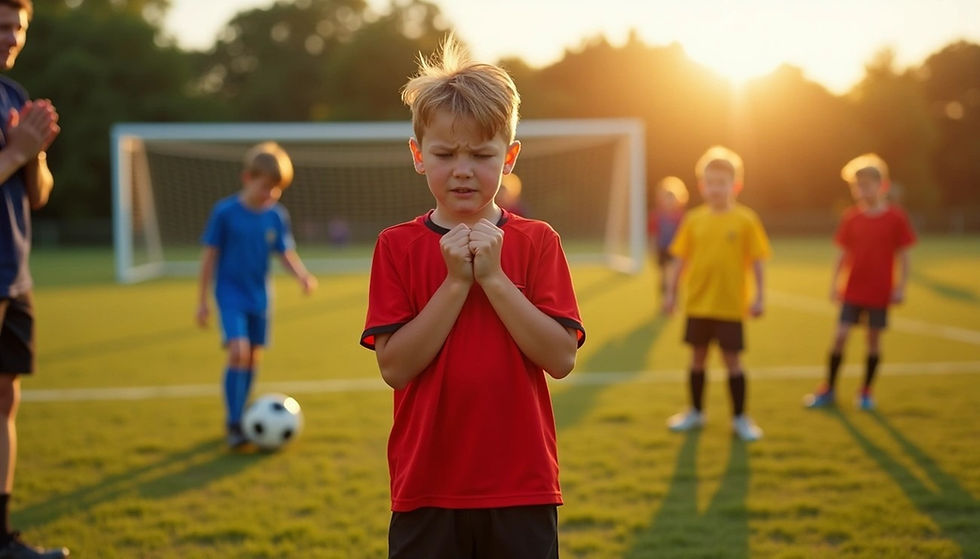
Parental Support in Youth Sports: Why Your Role Shapes Your Child's Confidence More Than You Think


Most discussions about parental support in youth sports focus on logistics like driving to practice and buying equipment. The real effect happens in the mental space we create for our kids. Confidence isn't a personality trait. It's a skill built through a specific process . Yet many parents chip away at this confidence rather than building it through their youth sports interactions. The gap between what we think supports our children and what helps them grow can be wide. Parental involvement in youth sports often creates pressure at the time we believe we're providing encouragement. This piece is about how parental support in sports shapes your child's internal belief system, the common mistakes that destroy confidence, and practical strategies to avoid parental pressure in youth sports while promoting genuine resilience.
Why Parental Support in Youth Sports Matters More Than Talent
The confidence gap most parents miss
Research in youth athletics reveals a pattern that catches most of us off guard: the most confident athletes often aren't those who received the most praise or won the most games early on [1]. Their confidence stems from specific environmental factors that parents can learn to foster, but the gap between what we think builds confidence and what does creates problems we don't see coming.
Parents play a pivotal role in shaping young athletes' experiences and provide everything from logistical support like transportation and equipment to emotional support that nurtures confidence, motivation, and resilience [2]. But this same involvement can become a source of stress unintentionally when expectations turn into pressure or when our sideline behavior sends the wrong signals [2].
How your involvement shapes their internal belief system
The quality of parental invovlement in youth sports substantially influences how children develop their sport participation patterns [3]. Studies that dissect coaches' perceptions found that 59% of parents had a positive influence on their child's athletic development, but 36% were noticed as having a negative influence [4]. The difference often comes down to behaviors we don't recognize as harmful: over-emphasizing winning, holding unrealistic expectations, or criticizing performance [4].
Parental support has been linked directly to child enjoyment, autonomy, and self-perception of sport skill [3]. Parental pressure connects to anxiety, discontent, and negative performance effects on the flip side [3]. Athletes who noticed their parents as excessively controlling or critical experienced more stress and reduced enjoyment, but those who felt their parents provided autonomy support reported higher levels of motivation and well-being [3].
The difference between support and pressure
The relationship between parental involvement and athlete outcomes follows an inverted-U pattern [3]. Moderately engaged 'supportive' parents yield better participation outcomes than either highly involved 'superparents' or disengaged parents. That middle ground matters more than the sheer amount of involvement.
Children whose parents place greater emphasis on winning often develop low self-esteem, anxiety, and a tendency to drop out of sport [5]. Those whose parents encourage them to focus on their own progression show greater well-being and self-determination [5]. An informal survey found that 58% of parents of collegiate athletes reported their child wanted to quit at some point [3]. The athletes who stayed engaged had parents who provided a listening ear and allowed time away from the sport to recharge.
What Destroys Confidence: Common Mistakes Parents Make Without Realizing
The behaviors that erode athletic confidence often masquerade as good parenting. We think we help when we analyze every play in the car or push our kids toward more training sessions. Yet these actions backfire and create the exact opposite of what we want for our children.
Outcome-focused praise instead of effort recognition
Players start viewing achievements as the sole indicators of their worth and potential when we place emphasis on outcomes like wins and losses, rankings, and scorelines [6]. This results-focused mentality creates a fixed mindset and magnifies the fear of failure, which stifles their willingness to step outside comfort zones [6]. Focusing praise on effort and perseverance nurtures a belief in the value of hard work instead [6]. False praise is the worst thing a parent can give; genuine and earned praise is the best type [7].
The post-game car ride breakdown
The drive home after a game is one of the most emotionally charged, unfiltered spaces in an athlete's life [8]. Correcting them, pointing out errors, or comparing their performance to someone else's can make even the most talented athlete second-guess themselves [8]. Athletes don't need more pressure the minute they step off the court; they need someone who can help them see the bigger picture [8].
Comparing your child to other young athletes
Trying to praise your child by comparing them to others destroys team dynamics [3]. This creates a fixed mindset and undermines process-specific development [3]. The best player on a team of average performers doesn't say much [3].
Over-scheduling without recovery time
Research shows that kids who get six or fewer hours of sleep per night face increased risk of overuse injuries [5]. Sport moves from enjoyable to overwhelming when training load builds up without enough rest [9]. Burnout symptoms include poor sleep, exhaustion, decreased performance, and losing enjoyment from playing [5].
Ignoring the mental side of sports
Young athletes who notice parental overinvolvement report worse mental health [10]. Parents who focus on specific outcomes intensify a young athlete's fear of failing and heighten anxiety [11]. Athletes who don't receive support are more vulnerable to mental health issues that persist beyond their sporting careers [12].
How to Provide Effective Parental Support in Sports
Effective parental support in sports requires intentional changes in how we involve ourselves with our children's athletic experiences. These strategies turn well-meaning involvement into genuine confidence-building support.
Change your focus from results to process
Goals focused on the process work better than those fixated on outcomes [13]. Athletes should concentrate on developing specific skills or maintaining consistent practice instead of targeting championships. Parents who emphasise effort-based feedback over results-driven praise create environments where failure becomes a growth opportunity [2].
Create a safe space for honest conversations
A safe place is a consistent space [1]. Build trust through attentive conversations that include asking questions and listening to responses while staying focused and making empathic remarks [14]. Unconditional love whatever their performance provides children with mental security [14].
Let them own their athletic experience
Releasing your child to the game means accepting that their sports experience belongs to them, not you [15]. Athletes develop autonomy and confidence when they learn through guided discovery rather than rigid instruction [13].
Recognize when to step back and when to step in
Your child might dread conversations about practice or avoid talking about their sport altogether when you're too involved [16]. Let coaches coach while you focus on being their biggest fan and support system.
Protect their recovery and downtime
Recovery isn't just about resting; it's about rebuilding and preparing the body for future challenges [17]. Allow off-seasons and breaks because rest is just as important as training [18].
Invest in their mental game development
Support from coaches and parents is vital to developing and maintaining mental toughness in young athletes [4]. Create support networks and build positive environments where communication is open and honest [4].
What Healthy Parental Involvement in Youth Sports Actually Looks Like
You need to watch for specific behavioral changes in both you and your child to know when parental involvement in youth sports is working. Patterns you can observe make the difference between helpful and harmful support visible.
Signs your support is building confidence
A secure attachment style develops when a parent demonstrates availability, sensitivity to distress signals, and responsiveness when needed [19]. Your consistent presence at games and practices builds confidence [20]. Athletes whose parents attend their practices and games see sports activities as fun, important, and useful. This makes them less likely to drop out [21].
How confident young athletes behave
Watch for signs that internal motivation is growing. Does your athlete start conversations about their sport? Do they show genuine excitement about practice? Can they bounce back from setbacks without excessive parental intervention [22]? Confident athletes take sensible risks in training and push themselves out of their comfort zones without fear of punishment when things go wrong [23].
The parent-child dynamic that creates resilience
Positive parental involvement boosts children's enjoyment and performance [24]. Three central features define this: sharing and communicating goals with your child, developing an understanding emotional climate, and engaging in boosting practices at competitions [24]. Autonomy-supportive parenting styles work best for athletes' motivation [25].
When your athlete starts trusting themselves
Athletes begin planning their own training schedules and life decisions on their own. They take responsibility parents handled before [26]. They develop ownership over their athletic experience and make choices within boundaries you've established rather than seeking constant approval.
Conclusion
Your child's confidence grows through the mental space you create, not the trophies they collect. The most powerful thing we can do is change our focus from outcomes to effort and from criticism to curiosity. You build resilience that goes way beyond the playing field at the time you provide autonomy support instead of pressure. Let them own their experience today while you become their biggest fan.
Key Takeaways on a Child's Confidence
Understanding how your parental support impacts your child's athletic confidence can transform their entire sports experience and build lifelong resilience.
• Focus on effort over outcomes - Praise your child's hard work and improvement rather than wins, scores, or comparisons to other athletes to build genuine confidence.
• Create emotional safety, not pressure - Be your child's biggest supporter by listening without judgment and avoiding post-game critiques that destroy their love for the sport.
• Let them own their athletic journey - Step back and allow your child to make decisions about their sport while you provide unconditional support from the sidelines.
• Protect recovery time and mental health - Ensure adequate rest, downtime, and open communication to prevent burnout and maintain their enjoyment of sports.
• Recognize the signs of healthy involvement - Watch for your child's genuine excitement about practice, ability to bounce back from setbacks, and growing independence in their athletic decisions.
When you shift from being a critic to being a champion of their effort and character, you're not just supporting their sports performance—you're building confidence that will serve them throughout their entire life.
References
[1] - https://purposesoulathletics.com/creating-emotionally-safe-spaces-for-athletes/[2] - https://benson-speaks.com/insights-1/f/parent-athlete-dynamics-in-youth-sports-unlocking-performance?blogcategory=Sports+Psychology[3] - https://changingthegameproject.com/howtopraiseyouratheltes/[4] - https://positivepsychology.com/mental-toughness-for-young-athletes/[5] - https://www.nationwidechildrens.org/family-resources-education/700childrens/2016/08/overscheduling-overuse-injuries-and-burnout-in-youth-sports[6] - https://members.thecoachessite.com/article/the-power-of-praising-effort[7] - https://moveunitedsport.org/truesport-respectful-communication-why-the-way-you-praise-matters/[8] - https://www.txopps.com/post/car-rides-and-conversations-using-the-post-game-chat-to-build-confidence[9] - https://balanceisbetter.org.nz/how-much-is-too-much-when-it-comes-to-youth-sport/[10] - https://pmc.ncbi.nlm.nih.gov/articles/PMC11215734/[11] - https://www.hopkinsmedicine.org/health/wellness-and-prevention/student-athlete-mental-health[12] - https://sportsmedicineweekly.com/blog/the-cost-of-ignoring-mental-health-in-youth-sports/[13] - https://www.drpaulmccarthy.com/post/how-to-build-mental-toughness-for-young-athletes-a-parent-s-step-by-step-guide[14] - https://www.sciencedirect.com/science/article/pii/S1469029224000694[15] - https://changingthegameproject.com/release-your-child-to-the-game/[16] - https://www.thedailydraftnewsletter.com/p/when-to-stop-coaching-your-child[17] - https://theathleteacademy.uk/youth-athletic-development/how-recovery-enhances-sports-performance-in-youth-athletes-5-simple-strategies-for-parents/[18] - https://www.ismsports.org/blog/a-parents-guide-to-supporting-young-athletes-best-practices[19] - https://pmc.ncbi.nlm.nih.gov/articles/PMC8366224/[20] - https://www.drpaulmccarthy.com/post/how-to-build-confidence-in-youth-sports-a-parent-s-guide-to-mental-toughness[21] - https://www.sciencedirect.com/science/article/pii/S1469029223000729[22] - https://www.psychologytoday.com/gb/blog/building-momentum/202501/the-science-of-building-athletic-confidence-in-youth-athletes[23] - https://www.drpaulmccarthy.com/post/building-emotional-resilience-in-young-athletes-a-parent-s-guide-to-raising-mentally-strong-kids[24] - https://www.casem-acmse.org/news/parenting-in-youth-sports/[25] - https://pmc.ncbi.nlm.nih.gov/articles/PMC10800670/[26] - https://pmc.ncbi.nlm.nih.gov/articles/PMC11190379/