


The Champion's Guide to Powerlifting Mental Preparation: What Elite Lifters Won't Tell You
- Dr Paul McCarthy

- Sep 18, 2025
- 15 min read
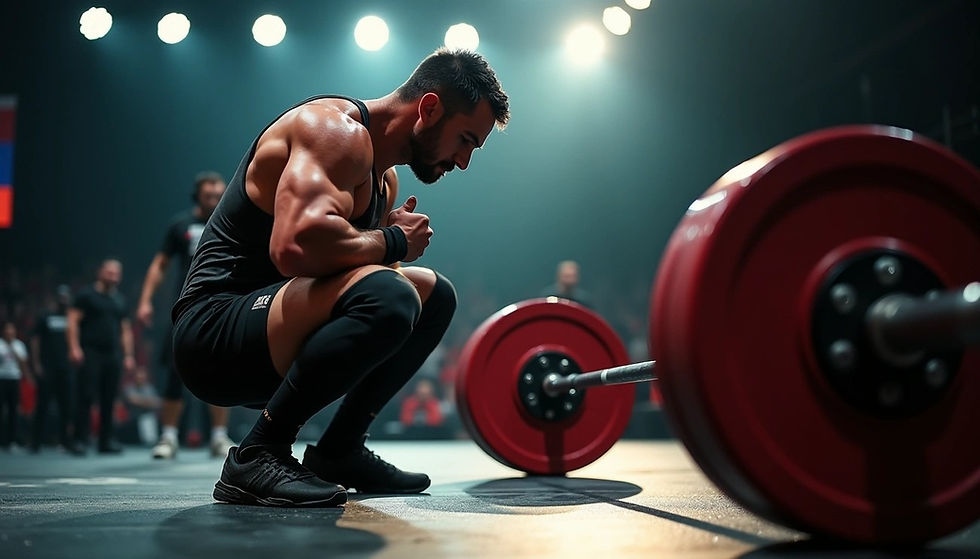
The psychological preparation in powerlifting is nowhere near as significant as the physical aspects of the sport itself . Most lifters concentrate on programming and technique, but the mental component distinguishes average competitors from great ones . Research shows that mental toughness relates to better performance and leads to improved confidence, control, self-reflection, and stress management .
My first powerlifting competition taught me a valuable lesson - approaching the barbell with doubt meant losing half the battle before starting . The powerlifting community's competitive environment is a chance to grow with every event . Understanding that your mental health equals physical training's importance will reshape your approach to powerlifting training or help improve your existing routine. The psychological elements of barbell training benefit other life areas, making mental preparation a skill worth developing .
This piece reveals mental strategies that top powerlifters use but rarely talk about. These techniques can give you the psychological edge you need to nail those crucial lifts during competition.
Why Mental Preparation Matters in Powerlifting
The gap between what you can lift and what you actually lift often comes down to one thing: your mind. Many powerlifters have found that physical strength means little without the mental fortitude to back it up. Even the strongest athletes can break under pressure when they haven't prepared mentally.
Mental strength vs physical strength
Raw strength is just one part of powerlifting. You might be the strongest person in the room but still have the weakest mindset. This mental gap will catch up to you in training and on the competition platform [1].
Look at how many lifters miss weights in competition that they've hit easily in training. This isn't about physical ability—it's about being ready mentally [1]. Studies show that mental strategies or "psyching-up" techniques help increase strength performance 61-65% of the time [2].
Powerlifting needs both mental and physical growth. Vladimir Zatriosky's research shows experienced lifters can lift about 10% more in competition thanks to mental factors [3]. This boost doesn't just happen—it comes from mental training that champions quietly work on.
How mindset affects performance under pressure
When competition lights shine bright, your mindset becomes your best friend or worst enemy. The best competitive lifters see their entire meet play out before it happens—just like elite athletes in other sports [3].
Mental imagery works in several ways:
It boosts motivation and self-belief
Builds confidence for attempts
Helps manage competition anxiety
Creates brain patterns like physical practice [2]
Competition pressure changes everything about lifting. You're not just training with friends anymore—you've got judges watching, crowds around you, and equipment you're not used to. This makes mental prep like visualization and staying calm even more important [4].
Here's a great example: Elite lifter Jona checked out his competition venue before the 2015 World Bench Press Championships. He wanted to get used to the ceiling view and lighting. This small detail made a big difference in his performance [3]. When you practice lifts in your head with competition rules, your brain learns exactly what to do on meet day.
The role of mental preparation in long-term success
Mental prep isn't just about single meets—it shapes how long you'll last in the sport. Mental toughness helps you handle:
Getting stuck at certain weights
Bouncing back from missed lifts
Staying motivated during tough training
Getting your head right after competitions [5]
The toughest competitors have what researchers call "grit"—they face setbacks but keep coming back stronger [3]. Take powerlifter Gavin Adin's story: He missed three world record squats before nailing it on his fourth try at the 2024 Sheffield competition. His mental strength helped him set two world records that day despite earlier failures [3].
Mental preparation techniques also prevent burnout, which makes many lifters quit too soon. Without tools to handle the ups and downs of getting stronger, talented lifters often give up too early [5].
Regular mental check-ins between training blocks work like maintenance. Just like you track physical recovery, checking your mental state after each training cycle keeps you motivated and focused [5].
Mental training techniques like visualization, staying calm under pressure, positive self-talk, and mindset work help lifters build the mental strength they need. This helps them handle both immediate pressure and long-term challenges throughout their powerlifting career [6].
Building a Resilient Powerlifting Mindset
Building mental resilience in powerlifting requires you to think over your approach to training and competition. Research shows that mental toughness associates with improved confidence, control, self-reflection, and stress management - all critical components to succeed on the platform [7]. As you progress on your powerlifting trip, becoming skilled at these psychological skills becomes just as important as mastering technique.
Letting go of perfectionism
Perfectionism is a double-edged sword that often holds lifters back instead of pushing them forward. Studies show that athletes with maladaptive perfectionism demonstrate lower self-esteem and higher anxiety levels [8]. In powerlifting, this shows up as:
Black-and-white thinking (viewing any performance less than perfect as failure)
Fear of mistakes leading to avoidance of challenges
Avoiding feedback due to fear of judgment
This mindset creates a toxic cycle of unrealistic expectations, especially when you have newer lifters. To curb this pattern, start focusing on the positives first. After each training session, list what went well before analyzing areas to improve [9]. This simple practice retrains your brain to recognize success among opportunities to grow.
It also makes a substantial difference when you move your internal dialog. Replace negative self-talk with strengthening affirmations. Writing positive phrases about yourself each morning and reading them aloud builds the mental foundation you need for resilience [9]. This may feel uncomfortable at first, yet with consistency, positive self-talk gradually overcomes negative thoughts.
Setting flexible expectations
Goals drive progress, yet rigid expectations often lead to disappointment. According to goal-setting research, people who set specific goals are substantially more likely to achieve them compared to those who don't [10]. The key lies in how you frame these objectives.
Elite lifters know that having a perfect meet prep is virtually impossible [11]. You just need to set realistic targets with flexible parameters after this realization. To name just one example, instead of fixating on hitting exactly 200kg, think about a range between 190-205kg as successful [12]. This approach prepares you mentally for various outcomes while maintaining high standards.
SMART goals (Specific, Measurable, Achievable, Relevant, Time-bound) provide structure without rigidity [8]. Balance your long-term vision with short-term processes above all. One experienced coach notes, "I'd rather set a 50lb goal and hit 75lb, than set a 100lb goal and hit 75lb" [1].
You should develop Plan B strategies for inevitable disruptions. Life complications like work, family obligations, and health issues will affect your training [11]. Creating alternative approaches beforehand prevents panic when circumstances change.
Staying grounded during setbacks
Setbacks aren't just bumps in the road—they're the proving grounds where resilience grows [13]. Every powerlifter faces plateaus, missed lifts, and disappointments. Champions stand out by how they respond to these challenges.
You can view mistakes as teachers rather than failures - this approach works well. Each missed lift offers valuable feedback about technique, programming, or recovery needs [14]. So after experiencing setbacks, assess the magnitude objectively without emotional overreaction. High stress levels only make the problem worse [11].
Veteran lifters understand that their best performances sometimes come through adversity. "In fact, my best meets have been with some of the worse injuries. I honestly think it helped me focus with more intensity and gave me a clearer vision of my goal," notes one elite competitor [11].
Note that failure doesn't define you—your response does [14]. When training feels difficult, think about dialing back rather than quitting entirely. Two or three weekly sessions maintain progress better than completely abandoning your program during challenging periods [1]. This balanced approach prevents the inconsistency that kills long-term gains while preserving your mental health.
Visualization and Mental Rehearsal Techniques
Mental imagery isn't just positive thinking—science proves it creates real physical changes in your body. Research shows mental imagery activates the same brain patterns as actual movement, which helps your brain build stronger connections without moving [15]. This explains why visualization has become a top performance tool among elite powerlifters, though they rarely talk about it openly.
How to visualize your lifts effectively
Your visualization practice needs to involve all your senses to work. Looking beyond just "seeing" yourself do a lift, you should use every sense:
Feel the roughness of the bar's knurling against your palms
Hear the sounds of clanging barbells and your chosen music
Smell the chalk dust and gym environment
Experience the physical sensations throughout your body [16]
The way you view the lift makes a big difference. Internal visualization puts you inside your body—you feel your muscles work and experience every sensation. External visualization lets you watch yourself from the outside [15]. Research shows internal imagery leads to substantially higher muscle activity than external imagery of the same movement [15].
You should practice 5-10 minutes daily, at least three times each week [2]. Studies prove this schedule works best, showing that mental imagery alone can boost muscle strength by 22% (compared to 30% from physical exercise) [17]. Regular practice beats random sessions—casual daydreaming won't create lasting brain changes [16].
Using mental imagery to reduce anxiety
Competition nerves often hurt platform performance, but visualization gives you great tools to manage anxiety. Mental practice boosts confidence, drives motivation, and turns scary nerves into helpful energy [2].
The sort of thing i love is picturing tough situations and how you'll handle them well. Instead of only seeing perfect lifts, practice dealing with problems in your mind [18]. To name just one example:
"I visualized missing my opening squat (something I've done several times) and coming back to nail a big third attempt. I rehearsed tweaking a pec on bench and finding the confidence to stay in the meet for deadlifts anyway." [19]
This method builds psychological resilience and keeps you calm when things don't go as planned. Of course, studies confirm that seeing yourself handle setbacks well builds more confidence than only imagining perfect scenarios [16].
Creating a mental script for meet day
Your mental script works like a psychological map for competition day. Start by creating a detailed picture of your whole meet experience—from weigh-ins through your final lift [2]. This script should cover:
The competition environment (sights, sounds, equipment)
Your physical preparation routines (warm-up, approach to platform)
Specific technical cues for each lift
Your emotional and physical responses [2]
The best results come from including both environmental elements and your physical and emotional reactions [20]. One elite lifter shares his method: "Before a big lift, I visualize success and then shut my brain off and let my body do what it's been trained to do. I close my eyes and imagine I'm in my comfort zone—my gym, my squat rack, my bench, my deadlift platform." [3]
Here's a sample script to try: "I am in control. Warm-up felt easy and snappy, and my muscles are relaxed and primed to lift. My core feels strong, and my form feels fluid. I hear my name being called and I pull the lever of my belt. I chalk my hands one more time and step out onto the platform. The crowd is roaring in the background. I know I can do this." [2]
Note that mental preparation in powerlifting needs practice. You wouldn't expect a perfect deadlift without technical work, and visualization skills grow over time. Success comes from consistency—each mental practice session strengthens these brain patterns.
Pre-Meet Mental Strategies Elite Lifters Use
Success on the powerlifting platform depends heavily on your mental state before the lift. Top athletes use specific methods to get their minds ready for peak performance at crucial moments.
Establishing a pre-lift ritual
The best powerlifters follow the same routine before each lift. It becomes natural over time. Research shows that 89% of top weightlifters performed better in training sessions when they listened to music [4]. A pre-lift ritual does two important things: it makes technical elements automatic and puts you in the right mental state for maximum effort [21].
Common pre-lift rituals include:
Physical actions: bar spinning in j-hooks, foot stomping, "screwing" feet into the floor
Sensory triggers: chalk application patterns, specific breathing sequences
Mental cues: consistent self-talk phrases, visualization of successful completion [21]
These rituals need to become second nature through practice. One competitor explains, "I perform the same action on my snatch before going into my start. I get my grip set on my left hand first, then I slide my right hand over the bar from my left hand out to my grip position for my right" [22]. Your ritual must work in any competition environment.
Each lifter needs a unique ritual. Try different approaches to find what suits you best. Once you find effective patterns, stick to them. Top lifters avoid rituals that need things they can't control during competitions [23]. The best cues come from within.
Controlling the controllables
Meet-day nerves often come from thinking about things you can't change. The best lifters stay focused by thinking only about what they can control. This helps reduce competition stress [24].
Your relationships matter too. "If you want your relationships to last, communicate to those around you, i.e., family, etc., and let them know that you're very focused and that you'll be more present when the prep is over" [25]. Being honest helps prevent personal stress from affecting your mindset.
Smart lifters know their competition venue well. "I visited the venue several times, just to know what type of environment I would be in and who would be there. This ritual of psychological preparation is helpful in allowing me to be prepared and focused, rather than being aroused by a new environment" [26]. This approach removes surprises that might throw off your focus.
Planning helps too. Make detailed lists for attempts, equipment, food, and what to wear [27]. This removes decision-making stress on meet day. "Have a game plan. Write out the clothes you'll wear, set them out, and make a list of the food and drinks you want to have on meet day" [27].
Using music and environment to your advantage
Music shapes both mental state and physical performance. Studies show it helps people exercise longer [28] and controls arousal levels, which affects lifting performance directly [26].
Pick music that matches your needs. Slower songs can calm your nerves. Faster beats boost energy levels [24]. Research proves that choosing your own music works best [4]. Personal playlists play a big role in mental preparation.
Competition rules don't allow music during lifts. But listening right before approaching the platform creates powerful emotional triggers. "Powerlifters often pick performance songs that can be listened to with personal devices immediately before they take the platform" [29]. This helps maintain ideal energy levels through your lift.
The environment around you matters too. "I approach meet day with a calm and collected mindset because that's how I best curb any anxiety that may arise" [27]. Some lifters stay alone between attempts. Others prefer company. The key is knowing what works for your mind.
Many top competitors think of competition as "a good day at your local gym" [27]. This view makes new places feel familiar and helps keep your mental state stable throughout the day.
In-the-Moment Focus and Arousal Control
Those few seconds before you grip the barbell often determine your success. Your mental preparation moves from planning to execution the moment you step onto the platform. This requires specific techniques to help you maintain an optimal performance state.
Breathing techniques to stay calm
Your mental state and lifting performance depend on proper breathing. We focused on rhythmic breathing to regulate your nervous system and manage pressure in your chest and abdomen [30]. Here are techniques that work well:
Box breathing: Inhale for four counts, hold for four, exhale for four, hold for four. This technique creates a calm body and an alert, focused mind [31].
Diaphragmatic breathing: Place one hand on your belly, inhale deeply feeling your diaphragm expand, then exhale slowly. You should practice this 3-4 times daily for 5-10 minutes to make it automatic during meets [6].
Your recovery between attempts improves when you breathe through your nose while keeping your tongue against the roof of your mouth - a vital factor for meet performance [32].
Channeling aggression without losing control
Each lifter needs to find their sweet spot for arousal - not too much, not too little. Yes, it is true that a "zone" exists where each lifter performs best [33]. You won't summon enough intensity if you're under-aroused, and you'll lose technique and proper muscle recruitment if you're over-aroused [5].
Different lifts may need different arousal levels. Higher arousal often works well for squats, while bench press needs more focus and less "psyching up" [5]. Experience will help you find your personal optimal level for each lift.
Deep breathing exercises or positive self-talk can help decrease excessive arousal [34]. Music that matches your desired energy level or "power positions" with arms outstretched can boost arousal when needed [35].
Using self-talk to stay locked in
Self-talk substantially reduces perceived exertion and improves endurance performance [8]. Here are two approaches that get results:
Motivational self-talk ("You got this!") works best when you use "you" instead of "I" [8]. This creates mental distance and objectivity.
Instructional self-talk focuses on specific tasks ("relax shoulders, deep breath, keep cadence") [8]. This blocks out external "noise" and keeps your mind focused on execution.
Your self-talk practice should be consistent during training to work effectively. Research shows cyclists using self-regulated positive self-talk saw their performance increase by 23.4% [8].
Post-Meet Reflection and Mental Recovery
The mental game after your last deadlift can make or break your powerlifting career. Post-meet recovery goes beyond just physical healing—your mind needs time to recover too.
Processing wins and losses
Most lifters go through what we call "post-meet blues"—feeling empty or sad after competing [9]. This emotional response hits different people differently but has fatigue, headaches, and sometimes unexplained crying [9]. These feelings are perfectly normal, so don't try to fight them.
The psychological crash often happens because you no longer have a specific date to work toward after months of focused prep [9]. Your body feels drained from hitting one-rep maxes and possible weight cuts, which only makes these emotions stronger [9].
Learning from mistakes without self-blame
New lifters often get stuck thinking about missed lifts, and this mindset can poison their future training sessions and meets [36]. Look at each competition as a chance to grow, whatever the outcome [27].
The best lifters handle setbacks differently. They look at what happened with clear eyes and quickly shift toward getting better. Take time after your meet to review your performance objectively:
What technical fixes do you need?
How well did your nutrition and recovery plans work?
Which mental strategies helped you handle pressure?
Maintaining motivation after the meet
You can curb motivation drops by planning your next competition right away [9]. This gives you a fresh target instead of dwelling on what's done [9]. Just balance this with enough recovery time before jumping back into hard training.
Note that off-seasons keep you healthy and help you last longer in powerlifting [1]. This is your time to try different training styles—activities like cycling or swimming help maintain fitness while giving your mind a break [9].
Conclusion
Success on the powerlifting platform ended up depending on your mental game. Elite lifters use several strategies they rarely talk about openly. A champion's mindset separates good lifters from great ones through visualization, pre-lift rituals, arousal control, and post-meet reflection.
Physical strength definitely matters. Your mental approach becomes the deciding factor when you face heavy weights under competition pressure. My experience shows that approaching a barbell with doubt almost guarantees failure. Proper mental preparation turns anxiety into fuel for better performance.
These psychological skills benefit more than just your lifting. Mental training in powerlifting builds resilience, focus, and emotional control that transfer to everyday challenges. You'll handle workplace stress, personal setbacks, and life obstacles with the same determination you bring to the platform.
Mental training needs practice just like physical training. You wouldn't expect to squat double your bodyweight without consistent physical practice. The same applies to mental control - it requires regular psychological exercises.
Every elite lifter has faced doubt, anxiety, and fear. Their success comes not from avoiding these emotions but from knowing how to acknowledge, process, and channel these feelings productively. They turn pre-competition nerves into focused energy and make post-meet disappointments valuable lessons.
Start using these mental strategies today, whatever your current strength level. Simple visualization exercises, consistent pre-lift rituals, and positive self-talk during training will build your psychological foundation. These fundamentals lead to bigger lifts when competition day arrives.
Your powerlifting experience should challenge both body and mind. The weights show not just physical limits but mental ones too. Face both with equal dedication and you'll find strength you never knew existed.
Key Takeaways
Elite powerlifters know that mental preparation often determines success more than physical strength alone. Here are the essential psychological strategies that separate champions from competitors:
• Mental strength trumps physical capability - Research shows 61-65% of strength performance improvements come from psychological factors, not just muscle power.
• Visualization creates real neural adaptations - Mental imagery activates the same brain pathways as physical movement, increasing muscle strength by up to 22%.
• Pre-lift rituals eliminate decision fatigue - Consistent routines (chalk patterns, breathing sequences, self-talk) create automatic responses under competition pressure.
• Control only what you can control - Elite lifters focus exclusively on controllable elements like preparation, technique, and mindset rather than external factors.
• Post-meet reflection prevents burnout - Processing both wins and losses objectively, without self-blame, builds long-term resilience and maintains motivation.
The psychological skills developed through powerlifting mental training extend far beyond the platform, helping you handle workplace stress, personal setbacks, and life challenges with the same determination you bring to heavy lifts. Start practicing these techniques during training sessions to build the mental foundation necessary for peak performance when it matters most.
References
[1] - https://www.billieasprey.com/blog/persevering-in-powerlifting[2] - https://ensopowerlifting.com/2022/03/imagery-for-powerlifting/[3] - https://www.jtsstrength.com/developing-winning-mindset/[4] - https://www.scienceforsport.com/music-and-exercise-can-your-favorite-tunes-really-improve-performance/?srsltid=AfmBOoprg6z0ZYmJsq2pfcir6NxQrP7ZAb4UPvMyxcbaLAxT9VY7qNrI[5] - https://www.elitefts.com/education/optimal-arousal-in-powerlifting/?srsltid=AfmBOoqFCxIYz-gH3jENRbLYjIeOZRqY_TR9vEMYMQ7rHnsyla7PtOJj[6] - https://www.healthline.com/health/breathing-exercise[7] - https://www.usaweightlifting.org/news/2024/april/01/the-psychology-of-weightlifting-building-mental-resilience[8] - https://www.wahoofitness.com/blog/how-to-use-positive-self-talk-to-boost-performance/[9] - https://www.girlswhopowerlift.com/blogs/blog/how-to-deal-with-the-post-meet-blues?srsltid=AfmBOoqdOnAQdSJzqAOF68T1jxgWV_zGa8K3uptTXVJEpzociYB0ddyo[10] - https://ironlegionscarborough.com/goal-setting-strategies-used-in-weightlifting/[11] - https://www.elitefts.com/education/how-to-achieve-your-training-goals/?srsltid=AfmBOoqbkK1h5oMmWI0U896q7-np_98mpSQdGQVwwzgbh07I5PxlBn1z[12] - https://www.boostcamp.app/blogs/the-mental-game-of-powerlifting-strategies-guide[13] - https://www.gymreapers.com/blogs/news/how-to-overcome-setbacks?srsltid=AfmBOoouJvezPlPkpKSxIJGYHcYjirMAZG1WQUX78g_Bsp1FmZ7G6K2H[14] - https://www.ironsidetraining.com/blog/responding-to-failure-how-to-move-forward-after-a-missed-lift[15] - https://pmc.ncbi.nlm.nih.gov/articles/PMC4974856/[16] - https://www.elitefts.com/education/visualization-for-powerlifting-how-to-train-your-brain-for-big-gains/?srsltid=AfmBOorjRC8G5no6YFO4kbBZq7GcYKETSrFgScLRC6DMgW_1mpeZDZPm[17] - https://www.researchgate.net/publication/343834259_Positive_Visualization_and_Its_Effects_on_Strength_Training[18] - https://www.elitefts.com/education/visualization-for-powerlifting-how-to-train-your-brain-for-big-gains/?srsltid=AfmBOoo_hA9Xjpc1iOqeAAiItnpneJCtzpETF_NhB8R1sT9TS7-2gCYe[19] - https://www.elitefts.com/education/visualization-for-powerlifting-how-to-train-your-brain-for-big-gains/?srsltid=AfmBOopq53XvYg0pig1MY17BPaA6pCgOcj3FsnEmZUTJb_XHFabRspS2[20] - https://www.researchgate.net/publication/335124138_Using_Imagery_to_Enhance_Performance_in_Powerlifting_A_Review_of_Theory_Research_and_Practice[21] - https://barbell-logic.com/lifting-rituals-useful-or-crazy/[22] - https://medium.com/@branamcs/a-routine-performance-rituals-in-weightlifting-c984727a22e9[23] - https://grassiron.com/articles/fitness-tips/pre-lift-ritual/[24] - https://ensopowerlifting.com/2022/04/psychological-peaking-for-powerlifting-meets/[25] - https://www.elitefts.com/education/training/powerlifting/strength-athletes-control-your-variables/?srsltid=AfmBOooXlHfwEGhHcBDPkZf-TluxR94Z_L3aGIS8AoUzc15usiN1WKOH[26] - https://www.harvestingstrength.com/blog/effects-of-mental-preparation-on-performance[27] - https://www.ironsidetraining.com/blog/meet-day-mentality[28] - https://pmc.ncbi.nlm.nih.gov/articles/PMC5435671/[29] - https://www.elitefts.com/education/music-as-a-performance-enhancer/?srsltid=AfmBOoocI3zrcZJu3C4wHrzlucLgk7Vylw0mJ9rErzv1TpRUfXPuW299[30] - https://www.lesmills.com/uk/fit-planet/fitness/breath-and-lifting/[31] - https://time.com/4316151/breathing-technique-navy-seal-calm-focused/[32] - https://blog.lionel.edu/the-art-of-breath-rethinking-breathing-techniques-for-weightlifting-and-beyond[33] - https://www.elitefts.com/education/optimal-arousal-in-powerlifting/?srsltid=AfmBOor2MKPW9D66DIYy_f_6zrXtGOrWOocI8-B_g77lMmF2-NPk38X6[34] - https://aepowerlifting.com/blogs/news/managing-arousal-in-powerlifting-techniques-to-increase-and-decrease-arousal[35] - https://strengthambassadors.com/blog/how-to-be-more-aggressive-in-your-lifting/[36] - https://www.trainheroic.com/blog/mistakes-newbie-powerlifters-make/


