How to Beat Sports Anxiety: A Champion's Pre-Match Mental Toolkit
- Dr Paul McCarthy

- Jan 4
- 8 min read

Elite athletes can improve their muscle coordination by 30% with detailed pre-competition routines. This fact might surprise you. Anxiety in sports affects even the most seasoned competitors .
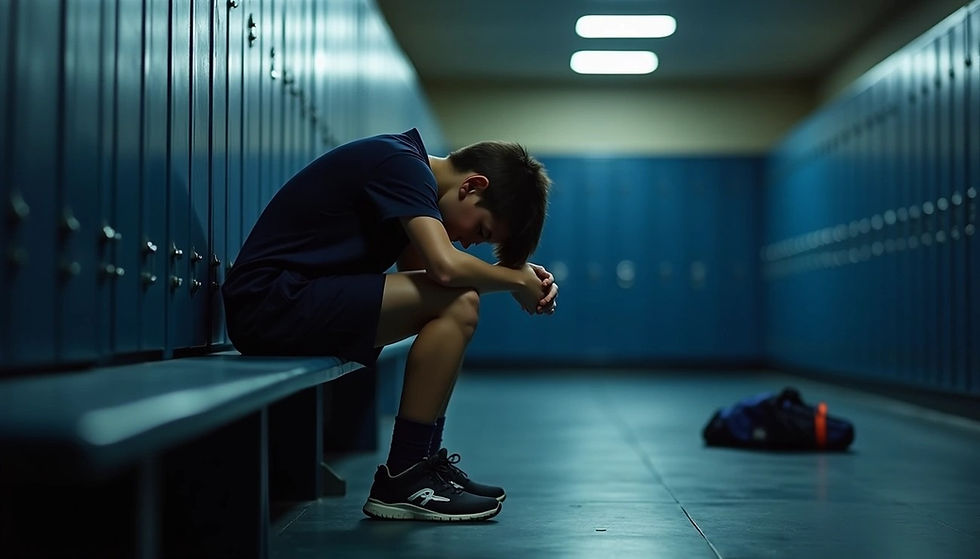
The feeling is familiar to all of us. Your heart races, muscles tense up, and that overwhelming sense of dread takes over before a big game. Athletes experience a specific type of stress that can trigger physical symptoms like nausea and fatigue before important events . Life brings anxiety in high-stress situations naturally , and it can grow excessive enough to harm your performance .
The pressure becomes unbearable for some athletes. I've watched teammates walk away from sports they love, just like those who stopped playing for months because negative emotions became too much . But here's the encouraging part - we can turn this nervousness into a competitive advantage with the right mental toolkit.
Let's explore proven techniques to overcome performance anxiety in sports. We'll cover everything from creating effective pre-game routines to practical breathing exercises that helped athletes improve their times by 5-12% . These strategies will help you perform at your best at the time it matters most, whether you're a weekend warrior or an aspiring champion.
Understand What Sports Anxiety Really Is
Sports anxiety is nowhere near as simple as regular nervousness. It's defined as "an unpleasant psychological state in reaction to perceived stress concerning the performance of a task under pressure" [1]. This condition affects many athletes, and studies show it touches between 30% to 60% of competitors [2].
What causes anxiety in sports performance
Sports anxiety comes from several sources. Athletes often feel anxious due to performance pressure, fear of failure, and event importance [3]. Here are other common causes:
The experience goes beyond just psychology. Research shows that "anxiety is a negative emotional state triggered by physiological arousal" that can affect athletic performance by a lot [6].
How to recognize early signs of performance anxiety
Performance anxiety shows through cognitive, physical, and behavioral symptoms. Early recognition of these signs helps with better intervention:
Physical signs:
Rapid heart rate and sweating
Trembling or shaking
Muscle tension or stiffness
Nausea or stomach discomfort [7]
Mental signs:
Worry and negative self-talk
Self-doubt and concentration disruption
Fear of embarrassment or letting others down [1]
Female and older athletes experience cognitive anxiety more often, which leads to concentration problems [1]. These disruptions can harm decision-making during vital moments.
Why some anxiety can actually help you perform
Unlike its negative image, moderate anxiety can improve performance. Research indicates that moderate anxiety levels help athletes focus their attention and boost motivation [3]. This relationship follows what's known as the inverted "U" theory, which suggests peak performance happens at the right anxiety level [2].
Sports psychologists believe this "sweet spot" of arousal gives you the energy and focus without overwhelming your thinking abilities. The physical feelings of anxiety can create an adrenaline boost that gives you a competitive edge.
Build Your Pre-Match Mental Toolkit
Mental preparation before competition matters just as much as physical training. Here's a powerful pre-match mental toolkit with eight strategies that can turn anxiety into peak performance.
1. Create a consistent pre-game routine
A pre-game routine gives you control and comfort, which reduces anxiety and boosts performance [8]. These rituals work as psychological anchors that help you focus and stay calm [9]. Your routines should stay consistent—whether they involve specific warm-ups, visualization, or breathing exercises—because they get both your mind and body ready to perform at their best.
2. Use visualization to rehearse success
Take 5-10 minutes each day to mentally rehearse your successful performances [3]. Your brain activates many of the same neural pathways during visualization as it does during physical practice [6]. You'll get the best results when you create vivid mental images that use all your senses—see, hear, and feel yourself succeeding [10]. This builds your confidence and prepares your brain to handle pressure situations.
3. Practice deep breathing and grounding techniques
Deep breathing triggers your vagus nerve, which tells your brain it doesn't need the "fight or flight" response [11]. Box breathing works well: breathe in for four seconds, hold for four, breathe out for four, and hold again for four [11]. Nasal breathing also helps you take fuller, deeper breaths that activate your parasympathetic nervous system and calm you down [12].
4. Set process-based goals, not outcome-based ones
Your goals should focus on what you can control rather than outcomes you can't influence [13]. Process goals help you learn needed skills [14], while performance goals connect to how you execute during competition [14]. Studies show that process goals matter most for athletes [15] and are the foundations to achieve performance and outcome goals.
5. Use positive self-talk to replace doubt
Athletes who use positive self-talk have more fun, interest, and value their effort more [16]. Research shows it improved physical performance by 11% [1]. Create personal, realistic affirmations in present tense like "I am a champion" [5]. You'll get better results if you address yourself by name ("You've got this") instead of using "I" statements [1].
6. Reframe anxiety as excitement
Don't try to calm down—instead, think of your anxiety as excitement [17]. This simple change from seeing things as threats to seeing them as chances substantially improves performance [18]. Your body responds the same way to anxiety and excitement with increased heart rate and arousal, so just saying "I am excited" out loud can change your view and performance [17].
7. Focus on effort, not perfection
Perfectionism makes you think in extremes where anything less than perfect feels like failure [19]. You'll do better if you celebrate small improvements and give your best effort whatever the outcome [20]. This helps reduce anxiety and pressure while making the experience more enjoyable and motivating [21]. It's worth mentioning that perfection isn't about flawless execution—it's about knowing you gave everything you could [20].
8. Use music or rituals to get in the zone
Music can reduce how hard things feel by 12% and improve your endurance by 15% [2]. Pick your music tempo based on what you need—upbeat songs to energize or slower ones to calm your nerves [2]. Top athletes like Michael Phelps (energizing) and Kelly Holmes (calming) use different types of music to control their pre-competition emotional state [2].
Train Your Body to Support Your Mind
Physical and mental connections mind-body connection are the foundations of managing sports anxiety. Your mental state responds directly to physical preparation, which builds a foundation for performing well under pressure.
How warm-ups reduce anxiety symptoms
Physical warm-ups prepare more than just muscles—they create powerful mental triggers that tell your brain you're ready to compete [22]. Athletes need this mind-body connection to manage their sports anxiety effectively. A consistent, step-by-step warm-up routine before competition helps your brain link these movements with confidence instead of anxiety [22].
Warm-ups boost blood flow and elevate your heart rate close to lactate threshold, which naturally eases anxiety [23]. A structured exercise routine gives you something positive to focus on and makes you feel more in control [24]. Your muscles loosen up and tension fades away through these physical preparations before competition [24].
The role of sleep and nutrition in managing nerves
Athletes' anxiety levels depend heavily on their sleep quality [25]. Good sleep supports normal brain function and emotional stability [25]. Poor sleep quality negatively affects health and performance [25].
What you eat affects your pre-competition nerves. Magnesium-rich foods like spinach and almonds help your body manage stress [26]. Your focus and mood can suffer from mild dehydration, so you should drink water throughout the day rather than just before competing [26]. Athletes with nervous stomachs can get their nutrients from smoothies or protein drinks without feeling uncomfortable [27].
Know When to Seek Extra Support
A solid mental toolkit helps, but sometimes anxiety needs professional help. Athletes need to recognize this difference to succeed in the long run.
When anxiety becomes overwhelming
Pre-game nerves are normal, but certain warning signs show you need professional help. You should seek help if you experience panic attacks with symptoms like muscle weakness or chest pain. Other red flags include a high heart rate even while resting, sudden mood changes, or hoping for an injury to skip games [28]. Young athletes need extra attention if they avoid practice, show physical symptoms, or seem depressed [29].
How sports psychologists can help
Sport psychologists help athletes improve performance, handle competitive pressure, bounce back from injuries, and stay motivated during exercise [30]. These experts teach great techniques like relaxation methods, mental rehearsals, and cognitive restructuring that work both in sports and life [30]. Athletes can overcome many obstacles with their help, from team communication problems to anger management and motivation issues [30]. A sport psychologist can provide personalized support to improve your performance, even if you don't have specific problems [31].
Talking to coaches, teammates, or parents
Your coach should verify your feelings without trying to be your therapist [10]. Good coaches thank athletes who share their concerns. They show empathy, ask about needed support, help remove mental health stigma, and stay connected even during breaks [32]. Teammates can be great supporters, especially when you let them understand your situation [32]. Parents play a key role by emphasizing that team membership means more than just performance - teamwork and effort matter just as much [33].
Conclusion
Sports anxiety hits almost every athlete sooner or later, whatever their skill level or experience. This piece explores practical ways to turn those pre-game nerves from a roadblock into your secret weapon.
Your experience starts with understanding what sports anxiety really is and spotting its early signs. A mental toolkit becomes your next step - consistent routines, success visualization, breathing techniques, and process-focused goals work together to boost your mental game.
Self-talk builds confidence without doubt, while seeing anxiety as excitement changes your whole point of view about pre-competition feelings. On top of that, it helps to focus on effort instead of perfection to take off the pressure that makes anxiety worse.
Your physical prep is a vital piece too. Well-laid-out warm-ups, good sleep, and the right nutrition reduce anxiety symptoms by a lot before games. You should know when anxiety is more than just pre-game jitters and get help from coaches, teammates, or professionals.
These aren't just theories - they're proven strategies that champions of all sports use. Even trying one or two of these methods can make your performance and enjoyment so much better.
Note that sports anxiety doesn't mean anything's wrong - it shows how much you care about doing well. These mental tools will help you build toughness that works in sports and life's challenges. Your nerves might stick around, but now you have everything you need to channel them into your best performance when it counts.
Key Takeaways
Sports anxiety affects 30-60% of athletes, but with the right mental strategies, you can transform pre-game nerves into a competitive advantage that enhances focus and performance.
• Build a consistent pre-game routine - Create structured warm-ups and rituals that trigger focus and calm, providing psychological anchors for peak performance.
• Reframe anxiety as excitement - Simply saying "I am excited" transforms threat mindset to opportunity mindset, improving performance by leveraging similar physiological responses.
• Focus on process goals, not outcomes - Set goals within your control (technique, effort) rather than results beyond your influence to reduce pressure and anxiety.
• Use positive self-talk and visualization - Practice mental rehearsal daily and replace doubt with realistic affirmations to build confidence and prepare neural pathways for success.
• Support your mind through physical preparation - Quality sleep, proper nutrition, and strategic warm-ups directly reduce anxiety symptoms and create mental readiness for competition.
When anxiety becomes overwhelming with panic attacks or avoidance behaviors, seeking help from sports psychologists or trusted coaches is essential for long-term athletic success and mental health.
References
[1] - https://www.coachestoolbox.net/mental-toughness/positive-self-talk-for-your-athletes[2] - https://www.innerdrive.co.uk/blog/music-in-sport-performance/[3] - https://thementalgame.me/blog/managing-competition-anxiety-how-to-keep-your-cool-in-high-stakes-games[4] - https://www.betterhelp.com/advice/anxiety/why-do-athletes-experience-sports-anxiety-how-to-minimize-stress-before-a-game/[5] - https://www.drpaulmccarthy.com/post/how-professional-athletes-use-positive-self-talk-examples-to-win-big[6] - https://ahead-app.com/blog/confidence/7-pre-game-rituals-that-boost-confidence-during-athletic-competition[7] - https://accelerate.sport/blog-post/recognizing-anxiety-in-sport-accelerate-sport/[8] - https://www.outsideonline.com/health/training-performance/new-science-embracing-performance-anxiety/[9] - https://thementalgame.me/blog/the-role-of-pre-game-rituals-in-enhancing-athletic-performance[10] - https://www.hopkinsmedicine.org/health/wellness-and-prevention/5-tips-for-overcoming-sports-performance-anxiety-in-student-athletes[11] - https://www.nytimes.com/athletic/6321893/2025/05/01/the-science-is-clear-deep-breathing-can-be-a-game-changer-for-anyone-elite-athletes-agree/[12] - https://pliability.com/stories/breathing-exercises-for-athletes[13] - https://www.trainingpeaks.com/blog/10-guidelines-for-effective-goal-setting/[14] - https://www.apadivisions.org/division-47/publications/sportpsych-works/goal-setting.pdf[15] - https://premiersportpsychology.com/2023/03/27/your-ticket-to-successful-goal-setting/[16] - https://pmc.ncbi.nlm.nih.gov/articles/PMC7429435/[17] - https://pubmed.ncbi.nlm.nih.gov/24364682/[18] - https://www.hbs.edu/ris/Publication Files/xge-a0035325 (2)_0287835d-9e25-4f92-9661-c5b54dbbcb39.pdf[19] - https://www.sailingperformancetraining.com/understanding-the-mindset-of-elite-athletes-perfection-vs-excellence/[20] - https://www.linkedin.com/pulse/different-take-perfection-how-effort-shapes-success-jimmy-j9rsc?trk=portfolio_article-card_title[21] - https://www.sportsmanagementmastermind.com/blog/focus-on-progress-over-perfection-and-win-every-time[22] - https://ahead-app.com/blog/anxiety/5-pre-game-rituals-to-calm-anxiety-in-competitive-sports-like-the-pros[23] - https://www.trainingpeaks.com/blog/avoiding-mental-sabotage-part-4-channel-pre-race-anxiety/[24] - https://www.performancerehabkc.com/post/4-physical-therapy-based-strategies-to-manage-sports-performance-anxiety[25] - https://pmc.ncbi.nlm.nih.gov/articles/PMC4645755/[26] - https://www.nutritionandcoaustralia.com/post/how-nutrition-affects-mental-focus-and-game-day-nerves[27] - https://gymnasticsmedicine.org/eating-for-the-win-three-tips-for-fueling-with-pre-competition-nerves/[28] - https://www.healthline.com/health/sports-performance-anxiety[29] - https://www.drpaulmccarthy.com/post/how-to-help-your-child-beat-sports-anxiety-a-parent-s-guide-that-works[30] - https://www.apa.org/topics/sport-rehabilitation/psychologists[31] - https://share.upmc.com/2022/05/how-anxiety-affects-sports-performance/[32] - https://pmc.ncbi.nlm.nih.gov/articles/PMC9214896/[33] - https://foxesclub.com/strategies-to-help-your-child-overcome-performance-anxiety-in-sports/