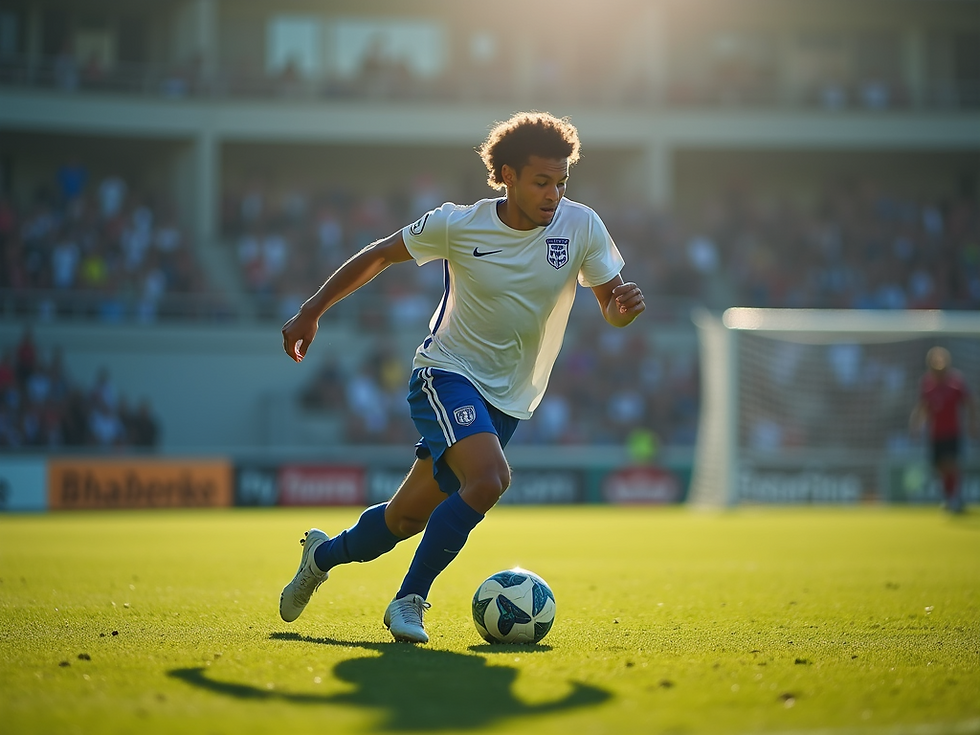
Six-Week Sport Psychology Support Program for an Individual Footballer
- Dr Paul McCarthy

- Aug 25, 2025
- 5 min read

Program Overview
This sport psychology for footballers program provides a structured approach to mental skills development through six weekly sessions. Each session builds upon previous skills while introducing new techniques to enhance performance on the pitch. The program is designed for individual implementation with one focused session per week, complemented by daily practice activities.
By the end of this football mental training program, you’ll have developed a comprehensive set of psychological tools to manage match pressure, maintain focus, regulate emotions, and perform consistently at your best.
Week 1: Assessment and Mental Foundations
Session Duration: 90 minutes
Session Objectives:
Establish baseline psychological profile
Identify key mental performance strengths and challenges
Introduce foundational mindfulness techniques
Create personalized program goals
Session Breakdown:
1. Initial Assessment (30 minutes)
Performance history discussion
Identification of key psychological challenges
Mental skills questionnaire completion
Analysis of match situations that trigger anxiety or loss of focus
2. Mindfulness Foundation (25 minutes)
Introduction to mindfulness for football performance
Basic attention training exercise
Body scan meditation practice
Connection between physical sensations and performance
3. Goal Setting (25 minutes)
Establishment of SMART psychological performance goals
Creation of mental performance vision
Identification of key performance indicators
Development of progress tracking system
4. Practice Plan (10 minutes)
Introduction to daily mindfulness practice (5 minutes)
Explanation of performance journal
Setup of weekly check-in system
Homework Assignments:
Daily 5-minute mindfulness practice
Complete 3 performance journal entries
Identify 3 match situations where improved mental skills would enhance performance
Week 2: Arousal Regulation and Energy Management
Session Duration: 90 minutes
Session Objectives:
Understand personal arousal-performance relationship
Develop pre-match arousal regulation routine
Learn in-match energy management techniques
Create recovery strategies for optimal psychological functioning
Session Breakdown:
1. Homework Review (15 minutes)
Discussion of mindfulness practice experience
Review of identified performance situations
Clarification of any challenges encountered
2. Arousal Regulation Training (30 minutes)
Identification of optimal performance zone
Diaphragmatic breathing technique practice
Progressive muscle relaxation training
Quick-reset breathing pattern for match use
3. Energy Management System (30 minutes)
Creation of pre-match psychological routine
Development of half-time reset protocol
Identification of energy-draining factors
Strategies for maintaining energy during matches
4. Recovery Protocol (15 minutes)
Post-match mental recovery techniques
Sleep optimization strategies
Mental fatigue management approaches
Homework Assignments:
Practice arousal regulation techniques daily (10 minutes)
Implement pre-match routine before training sessions
Track energy levels before, during, and after training
Complete arousal awareness log
Week 3: Concentration and Focus Enhancement
Session Duration: 90 minutes
Session Objectives:
Develop position-specific concentration skills
Learn techniques to maintain focus despite distractions
Create refocusing strategies for error recovery
Establish concentration cues for critical match moments
Session Breakdown:
1. Homework Review (15 minutes)
Discussion of arousal regulation practice
Analysis of energy tracking patterns
Refinement of techniques based on experience
2. Concentration Assessment (20 minutes)
Grid concentration exercise with baseline measurement
Attention style profiling
Identification of common distractions
Analysis of focus patterns during matches
3. Focus Training (35 minutes)
Position-specific attention exercises
Distraction-proofing techniques
Present-moment awareness drills
Simulation of match scenarios requiring specific focus types
4. Refocusing Protocol (20 minutes)
Error recovery system development
Refocusing routine creation
Trigger identification and response planning
Practice of refocusing techniques
Homework Assignments:
Daily concentration grid exercise (5 minutes)
Implementation of refocusing cues during training
Attention shift logging during practice
Position-specific focus drills (10 minutes, 3 times weekly)
Week 4: Self-Talk and Thought Management
Session Duration: 90 minutes
Session Objectives:
Identify current self-talk patterns and their impact
Develop performance-enhancing self-talk scripts
Learn thought management techniques for pressure situations
Create rational responses to performance challenges
Session Breakdown:
1. Homework Review (15 minutes)
Discussion of concentration practice results
Analysis of refocusing implementation
Identification of ongoing focus challenges
2. Self-Talk Assessment (20 minutes)
Current self-talk pattern identification
Impact analysis of negative thought patterns
Connection between thoughts and performance
Identification of key thought triggers
3. Performance-Enhancing Self-Talk (30 minutes)
Creation of instructional self-talk scripts
Development of motivational statements
Design of confidence-building phrases
Situation-specific self-talk planning
4. Thought Management System (25 minutes)
Cognitive restructuring technique practice
Thought stopping for crisis moments
Rational thinking training
Creation of thought management plan for matches
Homework Assignments:
Daily self-talk practice with personalized scripts
Implementation during training sessions
Thought monitoring and restructuring practice
Creation of self-talk cue cards for quick access
Week 5: Visualization and Mental Rehearsal
Session Duration: 90 minutes
Session Objectives:
Develop effective visualization skills
Create mental rehearsal routines for match preparation
Learn to use imagery for skill enhancement
Establish visualization techniques for confidence building
Session Breakdown:
1. Homework Review (15 minutes)
Discussion of self-talk implementation
Analysis of thought management effectiveness
Refinement of techniques based on experience
2. Visualization Foundation (25 minutes)
Multi-sensory imagery development
Internal vs. external perspective practice
Controllability and vividness enhancement
Basic visualization exercises
3. Performance Visualization (30 minutes)
Technical skill execution imagery
Tactical decision-making visualization
Position-specific scenario rehearsal
Pressure situation mental practice
4. Match Preparation Imagery (20 minutes)
Pre-match visualization routine development
Opponent-specific scenario rehearsal
Confidence state imagery
Success visualization techniques
Homework Assignments:
Daily visualization practice (10 minutes)
Pre-training mental rehearsal of key skills
Match scenario visualization
Creation of personal imagery scripts
Week 6: Integration and Long-Term Development
Session Duration: 90 minutes
Session Objectives:
Integrate all psychological skills into a cohesive system
Develop comprehensive match-day mental routine
Create pressure training program for ongoing development
Establish long-term psychological skills maintenance plan
Session Breakdown:
1. Homework Review (15 minutes)
Discussion of visualization practice results
Analysis of mental rehearsal effectiveness
Identification of most valuable techniques
2. Skills Integration (25 minutes)
Creation of comprehensive psychological routine
Development of situation-specific response plans
Integration of all techniques into cohesive system
Establishment of mental skills hierarchy
3. Match-Day Mental Plan (25 minutes)
Pre-match preparation sequence
During-match psychological strategies
Half-time reset protocol
Post-match reflection and recovery process
4. Long-Term Development (25 minutes)
Program review and progress assessment
Three-month psychological skills development plan
Self-monitoring and adaptation system
Resources for continued psychological development
Final Package:
Personalized psychological performance manual
Audio recordings of relaxation and visualization scripts
Digital tracking system for ongoing monitoring
Maintenance schedule with specific practice recommendations
Program Benefits of Sport Psychology Support
This football performance psychology program delivers several key benefits:
Enhanced Performance Under Pressure: Develop the ability to maintain skill execution during critical match moments.
Improved Emotional Control: Learn to manage frustration, anxiety, and other emotions that can impact performance.
Increased Consistency: Establish mental routines that promote reliable performance regardless of external conditions.
Faster Recovery From Setbacks: Develop resilience and the ability to quickly refocus after mistakes or challenges.
Greater Self-Awareness: Understand your unique psychological patterns and how they affect your performance.
Improved Confidence: Build genuine belief in your abilities through systematic mental training.
Better Focus Management: Develop the ability to maintain concentration on relevant cues despite distractions.
Implementation Guidelines
For maximum benefit from these footballer psychology sessions:
Consistent Practice: Mental skills require regular practice just like physical skills. Commit to daily implementation of techniques.
Integration With Physical Training: Apply psychological skills during technical and tactical training sessions.
Patience With Progress: Mental skills development takes time. Focus on small improvements rather than perfection.
Honest Self-Assessment: Regularly evaluate what’s working and what needs adjustment.
Personalization: Adapt techniques to fit your specific position, playing style, and personality.
The mental skills training football techniques provided in this program of sport psychology support have been proven effective for players at all levels. With dedicated practice and application, you’ll develop the psychological foundation needed for consistent high-level performance.