


How to Overcome Choking in Sports: A Step-by-Step Guide for Athletes
- Dr Paul McCarthy

- May 6
- 13 min read
The archer's bow trembles before the final shot, despite years of steady hands. I have watched this curious theater unfold countless times—athletes of remarkable calibre rendered helpless by the very stakes they have trained to embrace. The phenomenon presents itself like a riddle wrapped in paradox: how does mastery become fragility when circumstances demand its truest expression?
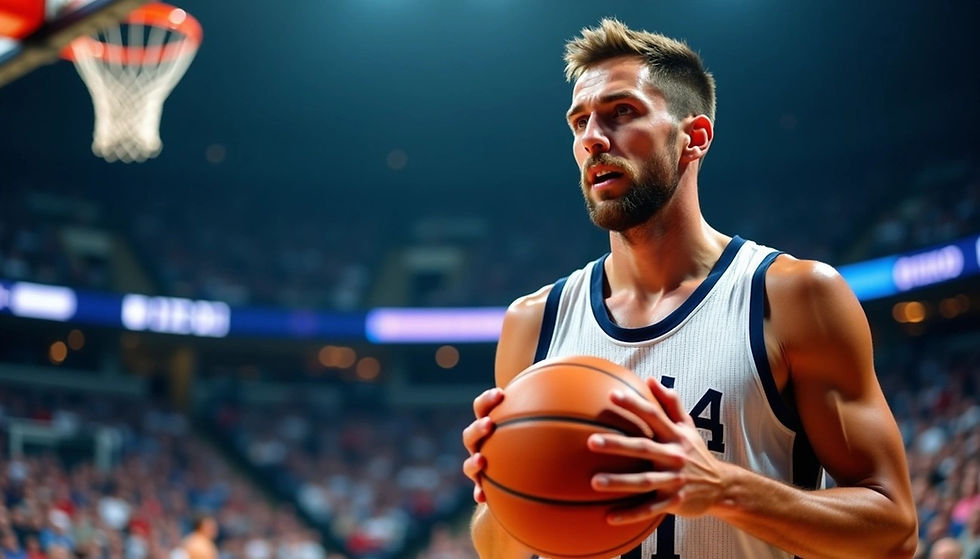
This theatrical collapse of expertise under duress finds itself well documented in the literature [13]. Consider the humble free throw—a skill so fundamental that children master it in driveways across suburbia—yet evidence reveals that 5% to 10% of these attempts falter during the final minutes of closely contested NBA games [2]. The margins separating triumph from catastrophe narrow to hairline fractures in these moments.
I find myself drawn to examine this curious betrayal of competence through two competing lenses: the wandering mind that abandons its post (distraction theory) and the conscious mind that interferes where it ought not tread (self-focus theory). The territory between these explanations holds secrets for understanding how skilled bodies forget themselves when memory matters most.
What follows explores the psychological architecture of choking—that peculiar state where performance becomes its own enemy. The stakes, as they say, make cowards of us all.
The Anatomy of Collapse: Distinguishing True Choking from Ordinary Failure
Performance failure manifests in countless guises across the athletic landscape, yet choking occupies a peculiar territory that distinguishes itself from the garden-variety mishaps and forgettable afternoons that pepper every competitor's biography. The essence of choking rests upon a single, unforgiving criterion: the dramatic abandonment of established competence precisely when competence assumes paramount importance.
The Architecture of Athletic Betrayal
Choking emerges when an athlete fails to execute within the boundaries of their demonstrated capability, particularly during moments when expectation runs highest [1]. This represents something far more specific than suboptimal performance—it describes the curious phenomenon where your body forgets lessons it has rehearsed thousands of times, occurring precisely when the desire to perform correctly reaches fever pitch [2].
The distinction carries weight because choking transcends mere poor execution. A solitary missed field goal or single strikeout does not constitute the phenomenon we examine here [2]. Rather, choking describes performance that plummets beneath your established baseline, often occurring when physical preparation peaks and technical readiness appears optimal [1]. The phenomenon stalks high-pressure moments where anxious ambition collides with the perceived magnitude of the situation [2].
Multiple tributaries feed this performance decline. Athletes find themselves swept away by distracting currents, their internal dialogue turns caustic and unproductive, while concerns beyond their immediate influence multiply like unwelcome guests [1]. Anxiety compounds through self-defeating narratives and creeping doubt, creating a downward spiral that feeds upon itself [1]. The wellsprings of pressure vary considerably—spectator scrutiny, evaluative concerns, material rewards, skill expectations, perceived importance, or the relentless tick of competition clocks all contribute their particular poison [2].
The Temporal Distinctions Between Anxiety and Collapse
Performance anxiety and choking share familial resemblances yet operate through distinctly different mechanisms. While both phenomena involve stress responses, their behavioral signatures follow separate trajectories [2].
Performance anxiety describes the general unease that accompanies athletic endeavors—a persistent companion that affects focus and confidence throughout the performance window. Choking, however, represents something more surgical: a sudden, dramatic deterioration that strikes during critical junctures when mental and physical pressure converge [2].
Timing provides the crucial differential. Performance anxiety arrives early and may linger throughout competition like an unwelcome shadow. Choking strikes with surgical precision during moments when everything hangs in the balance. While anxiety casts a broad influence over mental state, choking manifests as an observable, acute decline in execution quality precisely when excellence becomes non-negotiable [2].
Yet stress alone does not guarantee choking [2]. Athletes routinely compete while managing anxiety yet maintain their performance standards. Choking requires a specific confluence—pressure must intersect with particular cognitive responses that disrupt the automated systems upon which expertise depends.
The Physiological and Psychological Harbingers
Recognition begins with the body's honest testimony. Palms betray composure through perspiration, heart rate escalates beyond typical competition levels, muscles contract involuntarily, and trembling emerges in limbs that normally obey without question [2]. Facial flush appears, and movements that typically flow with practiced grace suddenly acquire an awkward, uncertain quality [2].
Mental indicators follow predictable pathways. Attention narrows dramatically, turning inward rather than engaging the competitive environment that surrounds you [2]. Tunnel vision develops, constraining your ability to assess situational context. Self-criticism accelerates, worry proliferates, and fear establishes residence in thought processes that should remain clear [2].
Behavioral changes announce choking's approach. Pre-performance routines that typically anchor execution become rushed or abandoned entirely, disrupting the natural rhythm cultivated through countless practice sessions [3]. Decision-making grows hesitant and uncertain. Skills that seemed as fundamental as breathing suddenly demand conscious effort and feel foreign to execute [2]. Technical elements that should remain subconscious receive unwelcome conscious scrutiny [2].
Athletes begin fixating on isolated elements while critical environmental information slips past unnoticed [2]. This hypervigilance—reminiscent of prey frozen before predators—creates a constricted field of awareness that prevents the pattern recognition and anticipation upon which high-level performance depends [2].
The Architecture of Mental Collapse: Understanding Pressure's Pathways
Two rival explanations compete for our understanding of how pressure dismantles the skilled athlete, each illuminating different corridors through which competence evacuates the moment. The wandering mind theory suggests attention abandons its post, while the hypervigilant mind theory proposes conscious interference where automaticity should reign supreme. Athletes spend nearly half their waking hours with wandering minds [2], yet when this mental drift occurs during competition, the consequences multiply significantly.
When Attention Deserts Its Post
Mind wandering describes a curious state where mental content shifts away from the current task toward self-generated thoughts and feelings beyond conscious control [2]. The attention that should anchor itself to the competitive moment instead drifts toward worries, doubts, and consequences that exist only in possibility. During high-pressure situations, approximately 26% of an elite performer's thoughts relate to distractions rather than the task at hand [2]. This attentional desertion operates by dividing focus between self-relevant anxieties and task-relevant processing [2].
Research examining what actually occupies athletes' minds under pressure reveals patterns that might discomfort those who prefer tidy explanations. When analyzing verbal reports from 70 expert athletes, only 4.1% of statements concerned movement execution, while 25.9% involved worries [13]. The mechanism functions by consuming attention and working memory resources [2], creating insufficient cognitive capacity to maintain adequate focus on competitive tasks [2]. Anxiety, it seems, redirects attention toward thoughts about performance consequences rather than execution itself [13].
The Paralysis of Conscious Interference
Self-focus theory presents a different culprit: the conscious mind meddling where it ought to remain silent [7]. This phenomenon, which some term 'paralysis by analysis,' occurs when mental effort actually inhibits performance [2]. Well-rehearsed movements normally operate through proceduralized, subconscious pathways, yet pressure-induced self-consciousness interferes with this hard-won automaticity [2].
The conscious processing hypothesis explains this through 'reinvestment,' where anxious performers revert to explicit knowledge and control strategies characteristic of novice execution [13]. Automated skills become vulnerable when athletes attempt step-by-step conscious control of processes that function optimally without scrutiny [2]. Curiously, findings support distraction as the more dominant explanation outside experimental conditions, as it activates automatically without manipulation [2].
The Personality Architecture of Vulnerability
Certain temperamental configurations predict choking susceptibility more reliably than others—an uncomfortable truth that challenges notions of equal vulnerability. Neuroticism shows positive association with trait anxiety, and individuals higher in neuroticism generate more pressure-related intrusive thoughts that decrease working memory resources [2]. Lower levels of conscientiousness serve as significant predictors of both choking and performance breakdown [2].
Perfectionism links with self-presentational concerns, creating compelling needs for acceptance that manifest when evaluation threatens [2]. Athletes with high anxiety sensitivity interpret automatic arousal as harboring harmful consequences, which amplifies performance disruption [2]. Fear of negative evaluation produces particularly strong effects, as experienced basketball players scoring high on this measure exhibited significant performance decreases when pressure escalated [2].
The Haunting Architecture of Previous Defeats
Past failure makes future failure more probable—a cruel mathematics that operates in both sport and life [2]. Teams that previously won penalty shootouts scored 85% of the time compared to only 65% when they had lost before [13]. Team ability made little difference in these outcomes, suggesting the memory of loss itself affected subsequent performance [13].
Every choke creates additional psychological freight for the next high-pressure situation, making the hurdle increasingly formidable [2]. This pattern suggests choking may represent a conditioned reaction to previous choking experiences or one significant emotion-laden failure [2]. Stereotype threat becomes baggage athletes carry from one major tournament to the next, perpetuating cycles of underperformance that resist rational intervention [2].
The Architecture of Resilience: Constructing Mental Fortitude
Mental fortitude resists spontaneous generation; it requires deliberate construction through the daily mortaring of disciplined habits [13]. I have observed that those who wait for toughness to emerge naturally often find themselves unprepared when the edifice of their preparation faces its severest tests. Training under conditions that mirror competitive demands serves as the most reliable foundation for normalizing pressure and preventing the collapse we have examined [14].
Constructing Pressure Through Artificial Stakes
The curious alchemy of pressure simulation lies in its ability to conjure authentic stress through manufactured circumstances [9]. Your nervous system, bless its primitive honesty, cannot distinguish between genuine threats and carefully orchestrated anxiety—both trigger identical physiological cascades [9]. This presents us with a remarkable opportunity: we can build stress tolerance in controlled environments before chaos demands its deployment.
Artificial consequences transform mindless repetition into meaningful engagement [9]. Consider the basketball player who must sprint after each missed free throw in a series of ten—suddenly, the gymnasium becomes a colosseum where teammates' imagined disappointment weighs upon each attempt [9]. Fatigue inoculation pushes athletes through exhausting conditioning, then immediately demands precision skills like penalty kicks or tennis serves [9]. This marriage of exhaustion and execution mirrors competition's cruel demands, training the mind to maintain technique when the body protests [9].
Environmental chaos serves as another architect of resilience. Flood training sessions with crowd noise, encourage teammates to distract during critical moments, or intentionally make questionable calls [9]. These disturbances teach athletes to construct mental sanctuaries amidst external turbulence [9]. Asymmetrical scenarios—placing athletes in deliberately disadvantaged positions—force problem-solving without the luxury of fair circumstances [9].
The Ritual Architecture of Pre-Performance Routines
Pre-performance routines constitute the ceremonial threshold between preparation and execution [15]. These sequences function as emotional regulators, confidence builders, and automatic performance triggers [4]. The most effective routines weave together physical actions—practice swings, dribbling patterns—with psychological elements including self-talk, imagery, and breathing techniques [16]. Precision in timing matters; psychological techniques must be brief, punctual, and deployed with complete concentration at precisely the right moment [4].
Mental Rehearsal as Emotional Inoculation
Imagery serves as emotional inoculation against competitive stress [17]. This multi-sensory process engages all senses to construct vivid mental experiences without external stimuli [18]. Daily practice sessions lasting 10-15 minutes elevate visualization from casual daydreaming to systematic performance enhancement [19]. Research indicates that visualization can reduce competition anxiety by up to 38% [19] while improving muscle coordination by approximately 30% compared to those who eschew this practice [19].
The Wisdom of Process Over Outcome
Process goals represent the daily building blocks within your control that construct the foundation for eventual success [20]. While outcome goals provide direction, exclusive focus upon them becomes overwhelming since they depend upon factors beyond your influence [21]. Process goals direct attention, mobilize effort, increase persistence, and motivate strategic development [21]. The athlete who focuses on perfect shooting form rather than making shots paradoxically makes more shots—a curious truth that reveals the indirect nature of mastery.
The Art of Remaining Steady When Everything Shakes
When pressure descends upon competition like fog rolling across a harbor, the athlete's response becomes the sole arbiter between fluency and fragmentation. These are not formulaic prescriptions but rather weathered signposts gleaned from observing countless performers who either held their ground or watched their skills scatter like leaves in a storm.
The Conversation of Rhythm
Rhythm endurance allows you to maintain posture, cadence, and relaxation as effort increases [5]. I observe that winners in archery adjusted slightly but stayed on rhythm, while those who faltered either hesitated too long or changed pace noticeably [6]. Seven out of eight archers took longer to aim when pressure mattered, averaging 1.4 seconds in normal moments versus 1.9 seconds in critical situations [6].
The secret lies not in fighting tempo but in befriending it. Maintaining your natural rhythm under tension gives you the best chance to succeed [6]. Pacing becomes a conversation with your body, not an argument [22]. The body remembers what the mind forgets, yet only if we refrain from shouting over its whispered wisdom.
The External Gaze
External focus directs attention outside your body while completing a task, whereas internal focus centers on body movements [23]. The research speaks with remarkable consistency: external cues produce superior performance compared to internal cues across balance tasks, force expression, change of direction speed, and sport skills with or without implements [24].
External cues allow your motor system to self-organize naturally [24], reducing conscious interference that disrupts automated movements. Rather than commanding "bend your knees," direct your intention toward pushing the ground away or reaching for a target [25]. The difference resembles conducting an orchestra versus micromanaging each musician—one creates harmony, the other cacophony.
The Economy of Words
Single-word cues act as mental shortcuts that align thoughts with desired actions [8]. These reduce the chance of distraction or overthinking [8]. A sprinter might think "drive" at the start, while a golfer uses "smooth" to maintain relaxed swing tempo [8].
Focus on what you want to do, not what to avoid [8]. The mind, peculiar instrument that it is, struggles to process negatives under stress. Practicing cue words consistently in training makes them automatic during competition [8]—like learning a language that your body speaks fluently when your mind grows cluttered.
The Anchor of Now
Mindfulness practice reduces depression, stress, and anxiety while boosting self-esteem [26]. Athletes break free from past disappointments and future worries through present-moment awareness [27]. Use short resets between plays: take a deep breath, refocus on the next move, and release the last play regardless of outcome [28].
The present moment becomes both refuge and laboratory—the only place where performance actually occurs, yet the most difficult territory to inhabit when stakes escalate.
The Rhythm of Breath
Slow breathing at 4-10 breaths per minute decreases basal heart rate and blood pressure while enhancing cardiovascular fitness and executive functions like attention and working memory [29]. Diaphragmatic breathing led to greater relaxation and better stress management during games in varsity athletes [29].
Breathing at six breaths per minute synchronizes breathing with heart rate, increasing on inhaling and decreasing on exhaling [11]. A 5.5-second inhale paired with a 5.5-second exhale provides an ideal average of 5.5 breaths per minute [27]. The breath becomes the metronome by which the entire performance orchestra keeps time.
The Alchemy of Defeat: When Failure Becomes Teacher
Choking episodes leave marks that extend well beyond the scoreboard, like invisible scar tissue that athletes carry into future contests. Those who regard mistakes as unacceptable play with the timidity of someone walking on glass, avoiding anything that might shatter their fragile composure [10]. Yet the response to these moments holds the key—do they become millstones or stepping stones?
The Curious Art of Reframing Catastrophe
"Failure is not the opposite of success but a stepping stone to it," goes the well-worn maxim, though I suspect most of us nod in agreement while secretly harboring less generous thoughts toward our own stumbles. Athletes with a growth mindset understand failure as feedback rather than verdict [30][31]. When performance falls short of aspiration, this becomes not a character indictment but raw material for reconstruction [30].
The challenge lies in creating psychological space where setbacks feel discussable rather than shameful [30]. Each unsuccessful attempt—whether mistimed movement, misplaced confidence, or mental surrender—contains intelligence about the next iteration [30]. Perhaps the question becomes not "Why did I fail?" but "What did this failure teach me that success could not?"
The Architecture of Honest Assessment
Self-compassion operates like a skilled craftsman who examines flawed work without destroying the workshop [32]. Those who practice it maintain exacting standards while refusing the tyranny of self-flagellation when those standards prove elusive [32]. The internal dialogue shifts from prosecution to investigation: What elements contributed to this outcome? What adjustments might serve future performance? [31].
Replace the harsh "That was catastrophic, I deserve banishment" with the more nuanced "This element succeeded, that one faltered. Next time I might..." [33]. The art lies in becoming one's own most honest yet kindest critic—a balance that proves surprisingly difficult for those accustomed to extremes of self-judgment.
The Accumulation of Small Victories
Small victories possess a peculiar alchemy, transforming into something larger through repetition [12]. Each practice session, however imperfect, adds another brick to the foundation of confidence [12]. Process goals—"maintain rhythm through the final third" rather than "win at all costs"—direct attention toward controllable elements [12].
These incremental gains may feel insignificant in isolation, like single drops that seem powerless against drought [12]. Yet over time, they create momentum that proves surprisingly difficult to arrest. The secret, I suspect, lies in learning to value progress over perfection—a lesson that proves easier to preach than practice.
The Threads That Bind Performance Together
The archer's bow no longer trembles—not because pressure has vanished, but because we have learned to dance with uncertainty rather than flee from it. What emerges from this exploration of skilled paralysis reveals itself as a curious paradox: the very techniques that liberate us from choking require us to embrace the loose threads of experience that we once sought to eliminate.
I find myself returning to the fundamental question that threads through this entire tapestry—how does one maintain expertise when stakes escalate? The answer, it seems, lies not in the elimination of pressure but in the cultivation of a different relationship with it. The mechanisms we have examined—whether the wandering mind or the interfering consciousness—represent not enemies to be vanquished but aspects of human performance to be understood and accommodated.
The laboratory of daily practice becomes our sanctuary, where pressure inoculation and routine development serve as compass points for the journey ahead. Yet perhaps more significant than any single technique stands the recognition that choking represents a learned response, which suggests it can be unlearned through patient application of what we now understand.
These reflections on competitive paralysis remind me that athletic performance mirrors the broader human condition—we are most vulnerable to collapse precisely when we care most deeply about success. The loose threads of doubt, fear, and overanalysis that seem to weaken our competitive fabric may actually strengthen the cement that holds together our understanding of what it means to perform under pressure.
The journey from skilled paralysis to pressure resilience continues, one breath, one routine, one moment of external focus at a time.
Key Takeaways to Overcome Choking
Master these evidence-based strategies to transform pressure situations from performance killers into opportunities for excellence. To overcome choking,
• Practice under simulated pressure regularly - Train with artificial consequences, fatigue, and distractions to build stress tolerance before competition matters most.
• Focus externally during competition, not on technique - Direct attention outside your body to targets or environmental cues rather than overthinking mechanics that should run automatically.
• Maintain your natural rhythm under pressure - Winners adjust slightly but stay on pace, while those who choke either hesitate too long or rush their normal timing.
• Use single-word performance cues - Replace complex thoughts with simple words like "smooth" or "drive" to reduce overthinking and maintain focus during critical moments.
• Reframe failures as learning opportunities - View choking episodes as valuable feedback for improvement rather than personal defeats, building resilience through self-compassion and constructive analysis.
Choking is a learned response that can be unlearned through consistent practice of these mental skills. The key is implementing these strategies daily, not just when pressure hits.
References
[1] - https://hbr.org/2022/04/the-science-of-choking-under-pressure[2] - https://members.believeperform.com/choking-how-do-athletes-perform-whilst-under-pressure/[3] - https://en.wikipedia.org/wiki/Choke_(sports)[4] - https://news.uchicago.edu/story/psychologist-shows-why-we-choke-under-pressure-and-how-avoid-it[5] - https://sterlingsportmindset.com/performance-anxiety-choking-under-pressure/[6] - https://www.apa.org/pubs/journals/releases/xge-1304701.pdf[7] - https://pmc.ncbi.nlm.nih.gov/articles/PMC11298806/[8] - https://www.studysmarter.co.uk/explanations/sports-science/sport-psychology/choking/[9] - https://www.theguardian.com/sport/2020/nov/05/under-pressure-why-athletes-choke[10] - https://www.trine.edu/academics/centers/center-for-sports-studies/blog/2022/choking_in_sports.aspx[11] - https://link.springer.com/article/10.1007/s12144-025-08677-z[12] - https://journals.humankinetics.com/view/journals/jsep/47/6/article-p390.xml[13] - https://research.vu.nl/ws/portalfiles/portal/3006396/275557.pdf[14] - https://www.tandfonline.com/doi/full/10.1080/1750984X.2017.1408134[15] - https://www.sciencedirect.com/science/article/abs/pii/S1469029206001294[16] - https://amelianewton.co.uk/blog/a-quick-note-on-attentional-theories-of-choking[17] - https://openpsychologyjournal.com/VOLUME/16/ELOCATOR/e187435012301130/FULLTEXT/[18] - https://pmc.ncbi.nlm.nih.gov/articles/PMC6985575/[19] - https://www.bbc.com/future/article/20140319-why-we-choke-under-pressure[20] - https://www.redbull.com/int-en/mental-toughness-athletes-grit[21] - https://www.malharmali.com/p/how-elite-athletes-train-for-pressure-ss-42[22] - https://athletesuntapped.com/blog/embracing-the-chaos-mastering-pressure-simulation-for-peak-mental-performance/[23] - https://www.tandfonline.com/doi/full/10.1080/1750984X.2021.1944271[24] - https://pmc.ncbi.nlm.nih.gov/articles/PMC9374066/[25] - https://www.sportpsychologytoday.com/sport-psychology-for-coaches/sports-pre-performance-routines/[26] - https://pmc.ncbi.nlm.nih.gov/articles/PMC12021890/[27] - https://pmc.ncbi.nlm.nih.gov/articles/PMC7180224/[28] - https://www.drpaulmccarthy.com/post/how-to-master-sports-visualization-a-pro-athlete-s-step-by-step-guide[29] - https://premiersportpsychology.com/2023/03/27/your-ticket-to-successful-goal-setting/[30] - https://coachhansen.com.sg/2024/10/05/navigating-between-outcome-performance-and-process-goals/[31] - https://speedpro.training/developing-rhythm-endurance-for-longer-races/[32] - https://www.worldarchery.sport/news/202259/secret-victory-archery-keep-your-rhythm[33] - https://qt2systems.com/blogs/mindset-type-the-intuitive-feeler/reading-15-pacing-patience-in-competition[34] - https://pmc.ncbi.nlm.nih.gov/articles/PMC11440818/[35] - https://www.scienceforsport.com/coaching-cues/?srsltid=AfmBOopvwPlX4o2HUXUPu4FebZx84u9Uj3Xr_SVtp2XFhNGaA8emk1NO[36] - https://ericcressey.com/a-coachs-view-on-internal-vs-external-cueing/[37] - https://www.sunrisecounselingdallas.com/blog/the-power-of-cue-words-in-sport-psychology-colorado[38] - https://www.drpaulmccarthy.com/post/how-elite-athletes-use-mindfulness-in-sports-a-mental-coach-s-guide[39] - https://www.drpaulmccarthy.com/post/10-proven-mindfulness-techniques-for-athletes-used-by-olympic-champions[40] - https://www.kidsinthehouse.com/blogs/kidsinthehouse2/mindfulness-for-athletes-staying-present-in-competition[41] - https://upsidestrength.com/blog/breathing-techniques-every-athlete-needs-for-better-performance/[42] - https://www.southwales.ac.uk/news/2019/december/how-controlled-breathing-helps-elite-athletes--and-you-can-benefit-from-it-too/[43] - https://discover.sportsengineplay.com/issues-and-advice/reframing-mistakes-learning-opportunities/[44] - https://www.jamesleath.com/notes/reframing-setbacks-as-learning-opportunities[45] - https://vocal.media/motivation/reframe-failure-as-learning[46] - https://www.njlifehacks.com/self-compassion-versus-self-criticism/[47] - https://sage-clinics.com/self-criticism-vs-self-correction-how-we-talk-to-ourselves-about-ourselves/[48] - https://sportspeedlab.com/the-power-of-small-wins-building-confidence-one-workout-at-a-time/


